Knee osteoarthritis: symptoms, causes and 6 ways to relieve pain

Knee osteoarthritis: symptoms, causes and 6 ways to relieve pain
Knee problems caused by osteoarthritis (gonarthrosis) are one of the most common reasons for pain in the knee joint. Almost 1 in 4 Dutch people over 65 are affected. Fortunately, there are many ways to relieve the pain without immediately thinking about surgery.
- What exactly is osteoarthritis of the knee?
- Symptoms of knee osteoarthritis
- Causes and risk factors
- The four stages of knee osteoarthritis
- 6 ways to relieve the pain
- Effective exercises for knee osteoarthritis
- Heat therapy and targeted massage
- When to see your GP or a specialist?
- Frequently asked questions
Knee osteoarthritis – also called knee arthrosis or gonarthrosis – is a form of wear and tear in which the cartilage in the knee joint gradually breaks down. This causes pain, stiffness and reduced freedom of movement. But osteoarthritis is not an irreversible death sentence for your knee: with the right combination of exercise, weight management, heat therapy and targeted massage, you can significantly reduce the symptoms and stay active. In this article: the medical background, 6 proven ways to relieve pain, practical exercises and when professional help is needed.
What exactly is osteoarthritis of the knee?
Osteoarthritis of the knee, also known in the medical literature as gonarthrosis or knee osteoarthritis, is a chronic joint condition in which the cartilage between the thigh bone (femur) and the shin bone (tibia) slowly wears away. Cartilage is a smooth, flexible tissue that acts as a shock absorber between bones – with osteoarthritis, this tissue becomes thinner, rougher and eventually patchy.

In knee osteoarthritis, the cartilage between femur and tibia wears away, resulting in pain, stiffness and restricted movement.
When the cartilage disappears, bone-on-bone contact occurs during movement. The body responds with inflammation, bony growths (osteophytes) and eventually joint deformity. The process develops gradually over years – often without you noticing at first.
According to Reuma Nederland, more than 1.4 million people in the Netherlands have osteoarthritis, a large proportion of them in the knee. It is more common in women than in men, and prevalence rises sharply after the age of 50.
Symptoms of knee osteoarthritis
The symptoms of knee osteoarthritis often develop gradually. At first you may put it down to tiredness or overuse – only when the symptoms become chronic do they stand out. The main symptoms of knee osteoarthritis:
Pain when the knee is loaded
The most classic complaint: pain that comes on under load. Especially when climbing stairs, getting up from a chair, squatting or on longer walks. At rest, the pain usually largely disappears. In advanced osteoarthritis there may also be pain at rest and at night.
Morning stiffness (less than 30 minutes)
When you get up, the knee feels stiff and difficult to move. After 15–30 minutes of movement, the stiffness eases. This distinguishes osteoarthritis from, for example, rheumatoid arthritis, where stiffness often lasts longer than an hour. Stiffness also returns after sitting for a long time – the so-called "start-up pain".
Restricted movement and reduced function
The knee bends less far than it used to. Squatting becomes difficult, sitting cross-legged is uncomfortable, and getting in and out of a car takes extra effort. The full range of motion gradually decreases.
Swelling and a grinding sound (crepitus)
The grinding sound when moving – medically known as crepitus – is caused by irregular cartilage. Sometimes the knee swells due to overproduction of joint fluid. The knee may feel warm and, in rare cases, turn red – a sign of an inflammatory phase.
- Acute sharp pain after a fall or injury;
- The knee "locks" – you can no longer straighten or bend it;
- Severe swelling with warmth and redness (possible infection);
- Pain that keeps you awake at night and does not go away;
- The knee gives way – feels unstable when walking.
Causes and risk factors of knee osteoarthritis
Osteoarthritis is not a "disease" you catch, but a combination of factors that speed up cartilage wear. The most important:
| Risk factor | How it contributes | Can you influence it? |
|---|---|---|
| Age (50+) | Cartilage naturally loses quality | No, but you can slow it |
| Excess weight | Extra load per step = faster wear | Yes – biggest lever |
| Previous knee injury | Meniscus tear, cruciate ligament, fracture | Afterwards, only rehabilitation |
| Genetic predisposition | Some families inherit cartilage quality | No |
| Female sex | Hormonal and anatomical factors | No |
| Heavy physical work | Constant pressure on the knee joint | Partly |
| Muscle weakness (quadriceps) | The knee is less well protected | Yes – through training |
| Leg alignment (bow legs/knock knees) | Uneven load on the knee joint | With insoles/aids |
Key insight: the factors you can influence – especially weight management and muscle strengthening – have a major impact on symptoms and progression. That is why these are the first measures GPs and physiotherapists recommend.
The four stages of knee osteoarthritis
Osteoarthritis is often divided into four stages (according to the Kellgren-Lawrence classification), each calling for a different approach:
| Stage | Characteristics | Treatment |
|---|---|---|
| Grade 1 – Early | Slight wear, hardly any symptoms | Lifestyle + exercise |
| Grade 2 – Mild | Visible wear on X-ray, mild pain | Physio + heat + nutrition |
| Grade 3 – Moderate | Clear joint space narrowing, regular pain | + medication, sometimes injections |
| Grade 4 – Severe | Bone-on-bone contact, severe pain | Consider knee replacement |
The good news: in grades 1 to 3 you can function perfectly well with conservative treatment (no surgery). Surgery only comes into the picture at grade 4 with unbearable pain – and even then it can often be postponed with a targeted approach.
6 ways to relieve knee osteoarthritis pain
The Dutch NHG guideline for knee osteoarthritis recommends a stepped approach: start with lifestyle measures and pain relief, then step up to physiotherapy and possibly medication. Surgery is the very last option. Below are the six most effective ways to relieve knee osteoarthritis pain – backed by research.

Six proven ways to reduce knee osteoarthritis symptoms, from immediate effect to long term.
Heat relaxes the muscles around the knee joint and stimulates blood flow. For osteoarthritis, this is one of the most effective ways to get immediate relief from pain and stiffness. Infrared penetrates deeper into the tissue than surface heat (hot-water bottle, heat patch) and reaches the joint tissue itself. A 20–30 minute session can provide hours of relief, especially for morning stiffness.
Many people think they should rest with osteoarthritis, but the opposite is true. Inactivity makes osteoarthritis worse: the muscles get weaker and the joint becomes even stiffer. Recommended: low-impact exercise such as walking, cycling, swimming or aqua fitness. 30 minutes a day is a good starting point. Build up to 5 times a week.
Research shows: every extra kilo of body weight means roughly 4 kilos of extra pressure on the knee when walking. Losing just 5–10 kg significantly reduces osteoarthritis pain in people who are overweight – often more than medication. Statistically, this is the most effective intervention for knee osteoarthritis when excess weight is a factor.
Osteoarthritis has an inflammatory component. A diet rich in omega-3 (oily fish, linseed, walnuts), green leafy vegetables, olive oil and yellow and orange vegetables has an anti-inflammatory effect. Avoid refined sugar, processed meat, fried food and alcohol – they fuel inflammation. The Mediterranean diet has been shown to be beneficial for knee osteoarthritis.
The Dutch GP guideline (NHG) names physiotherapy as the first medical treatment option for knee osteoarthritis. A physiotherapist teaches you targeted exercises to strengthen the quadriceps (thigh muscle) – a strong quadriceps takes pressure off the joint. Results usually show after 4–6 weeks of consistent practice.
A combination of heat and vibration massage on and around the knee stimulates local blood flow, relaxes the connective tissue and reduces pain. The Flamengo InfraPulse is designed specifically for this – you place the device directly on the knee for sessions of 5–10 minutes. Suitable for daily use without side effects.
Effective exercises for knee osteoarthritis
Research consistently shows: exercises for knee osteoarthritis reduce pain, improve mobility and slow progression. Four exercises you can do at home, 10–15 minutes a day:
Exercise 1: Quadriceps tightening (seated)
Sit on a chair with your leg straight. Tighten the quadriceps (thigh muscle) as hard as you can, hold for 5 seconds, relax. Do 15 repetitions per leg, 3 sets a day. Strengthens the muscle that stabilises the knee joint.
Exercise 2: Lying leg raise
Lie on your back. Bend one leg (foot flat on the floor) and keep the other leg straight. Lift the straight leg 30 cm and lower it slowly. 10–15 repetitions per leg, 2–3 sets. No pressure on the knee joint – but good muscle building.
Exercise 3: Wall squats (mini version)
With your back against a wall, feet 30 cm forward. Slowly lower until your knees are at a 30–45° angle (no further!), hold for 5–10 seconds, come back up. Start with 5 repetitions and build up to 10–15.
Exercise 4: Heel to buttock (standing)
Stand upright, using the back of a chair for support if needed. Bend one knee and bring your heel towards your buttock. Hold for 2 seconds, lower. 10–15 repetitions per leg. Improves flexibility and blood flow.
Heat therapy and targeted massage for knee osteoarthritis
Of all the conservative measures for knee osteoarthritis, heat therapy is one that can provide immediate relief. It works in three ways:
- Muscle relaxation: the muscles around an arthritic knee often tense up as a protective mechanism. That tension causes extra pain. Heat relaxes these muscles directly.
- Improved blood flow: heat widens blood vessels and ensures a better supply of nutrients to the knee joint. See our article on improving blood circulation with infrared for more explanation.
- Pain dampening: heat blocks pain signals via the "gate control" theory – heat-sensitive nerves override the pain nerves.

Flamengo combination: InfraPulse for a targeted effect on the knee, sauna blanket for whole-body relaxation.
Flamengo InfraPulse – directly on the knee joint
The Flamengo InfraPulse is designed specifically for joint pain – knee, shoulder and elbow. It combines infrared heat with gentle vibration massage. You place the device directly on the painful knee, choose a programme and let it do its work for 5–10 minutes. Suitable for daily use, including in the evening before bed to reduce night-time pain.
Flamengo sauna blanket – whole-body relaxation
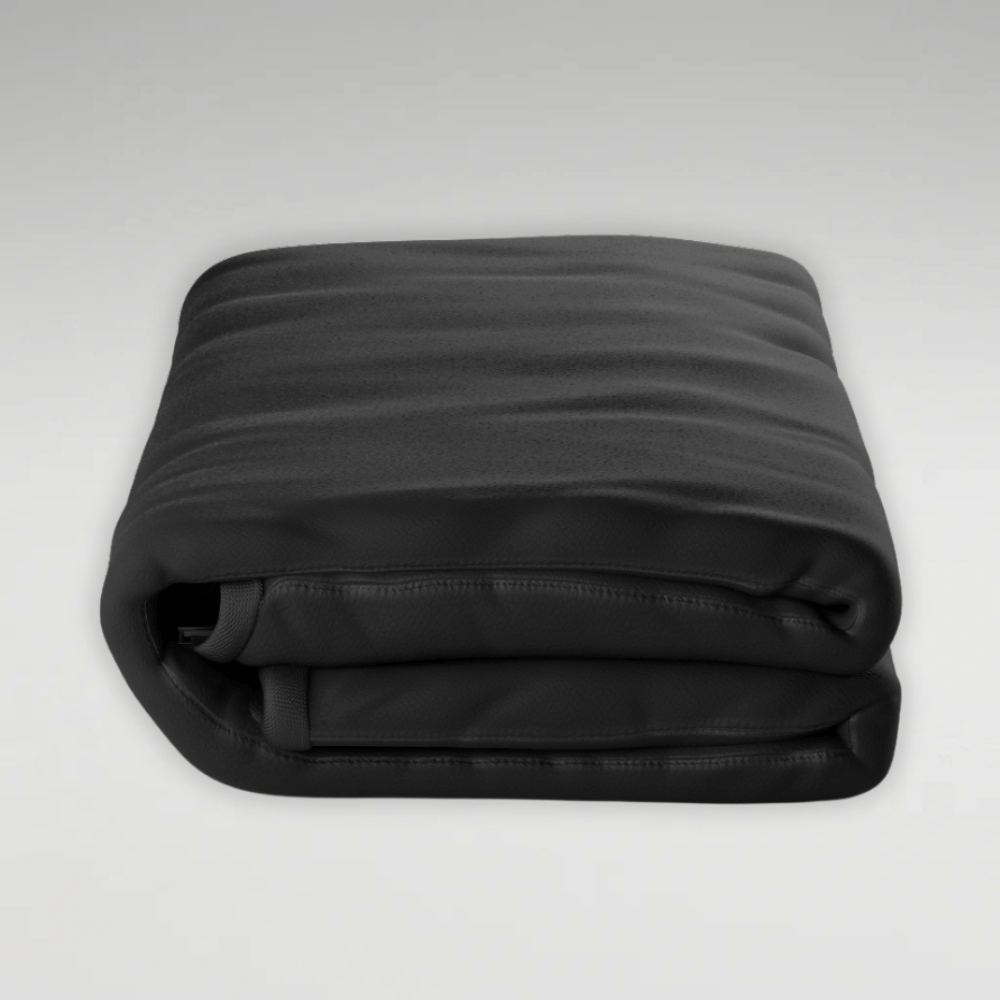
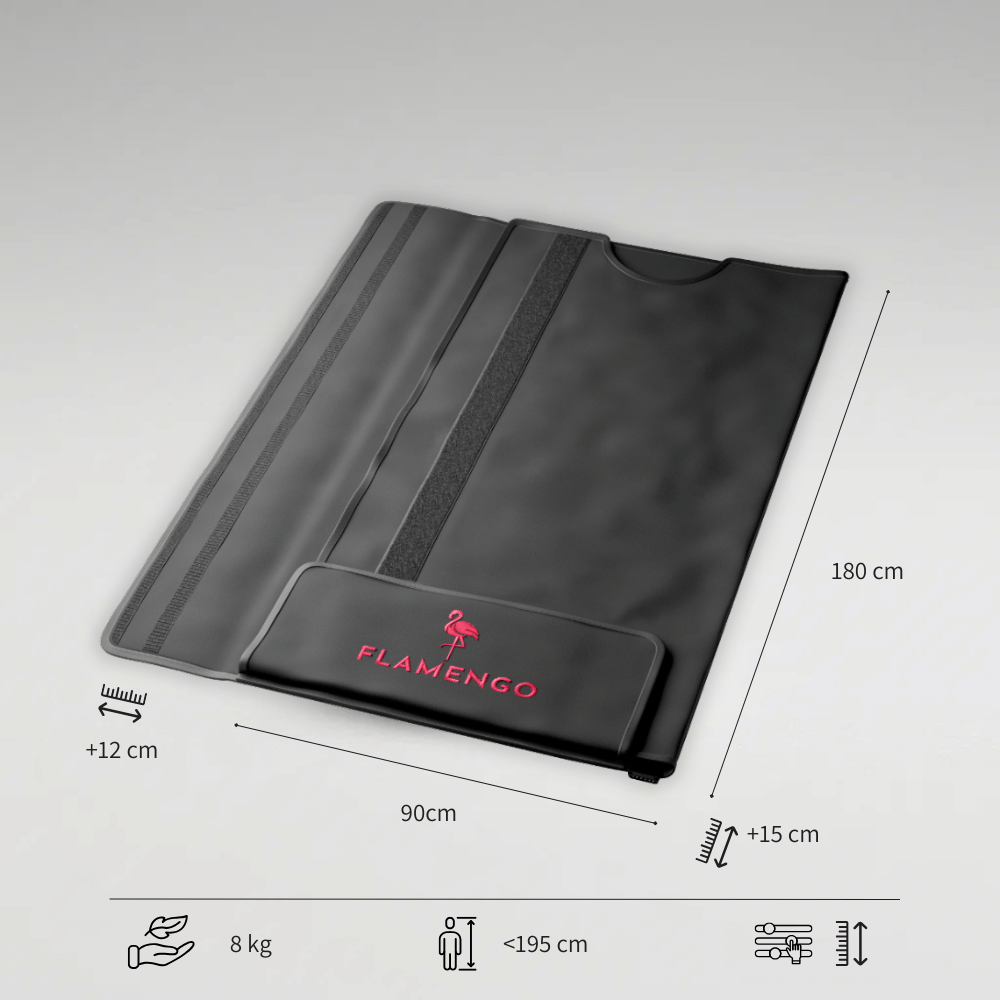
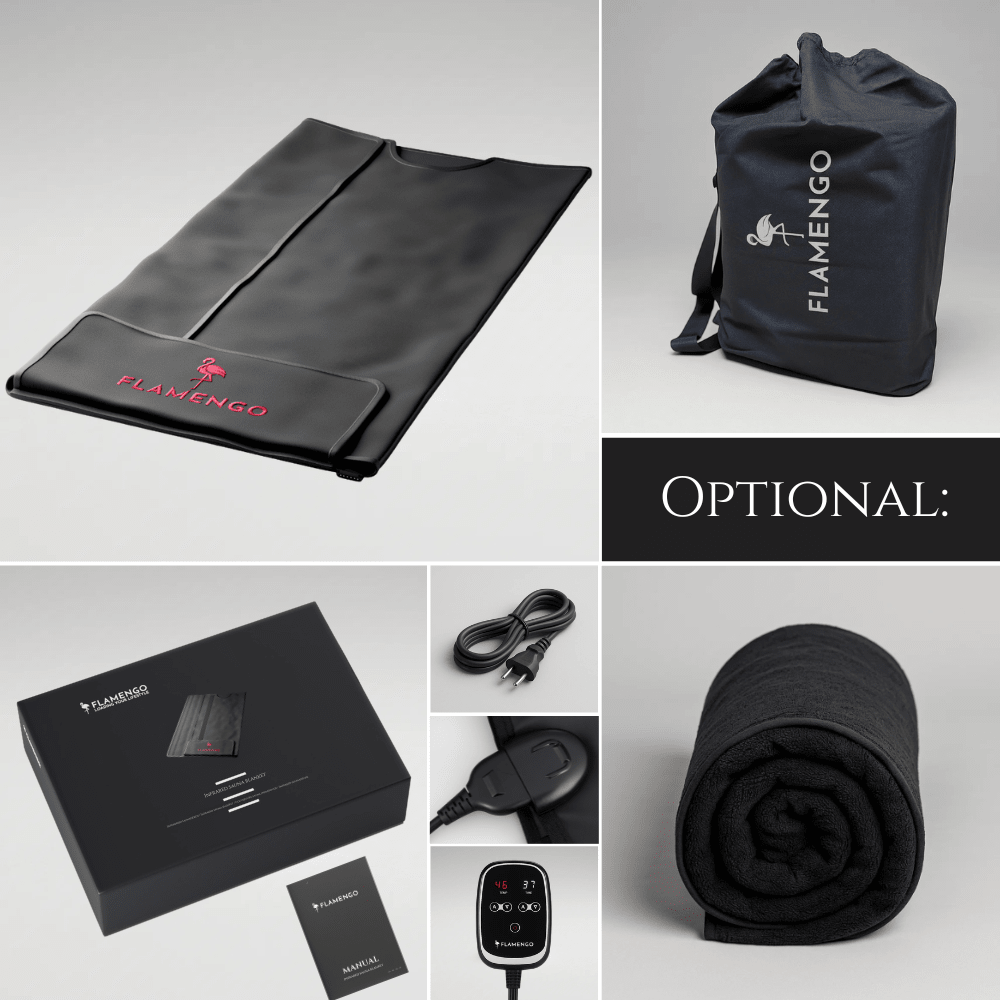
For those who, besides knee osteoarthritis, also have wider joint complaints or stress (which makes joint pain worse): the Flamengo sauna blanket relaxes the whole body. A 30–45 minute session at 55–65°C improves blood flow to all joints and muscles at once. Especially effective in combination with the InfraPulse – first the sauna blanket for all-over warmth, then targeted massage on the knee.
When to see your GP or a specialist?
With osteoarthritis, self-management (exercise, heat, weight) is a big part of the solution – but there are times when professional help is essential.
Contact your GP straight away if you have:
- Severe pain after a fall or injury – to rule out a cruciate ligament or meniscus tear;
- The knee "locks" – you can no longer straighten or bend it;
- Rapid swelling with warmth and redness – possible infection;
- Pain that keeps you awake at night and does not ease with the usual measures;
- Unexplained weight loss or fever combined with joint pain.
Book an appointment if you have:
- Symptoms lasting longer than 6 weeks;
- Steadily decreasing mobility;
- Difficulty with daily activities (shopping, stairs, getting in/out of the car);
- A suspicion that it is more than osteoarthritis (rheumatoid arthritis, gout – requiring a different approach).
Your GP can refer you to a physiotherapist (first choice), a rheumatologist (if the diagnosis is uncertain) or an orthopaedic surgeon (for injections or surgical options). Also read our page on relieving chronic pain for a broader view of persistent pain.
Frequently asked questions about knee osteoarthritis
The first symptoms of knee osteoarthritis are often: pain under load (especially climbing stairs and getting up from a chair), morning stiffness that eases within 30 minutes, a grinding sound when moving, and a gradual reduction in freedom of movement. At first, the pain goes away again at rest.
Exercise is essential for knee osteoarthritis, provided you choose the right kind. Low-impact activities such as walking, cycling, swimming and aqua fitness are beneficial – they strengthen the muscles around the knee without overloading the joint. Avoid running on tarmac, jumping and pivoting sports if they cause pain. Movement has been shown to be more effective than rest.
Heat works best for chronic osteoarthritis pain and morning stiffness – it relaxes muscles and improves blood flow – see also the science behind infrared therapy. Cold (an ice pack) is only suitable for acute swelling or after intense exertion. For daily use and long-term effect: heat therapy. Our InfraPulse combines both options if desired.
The four best exercises: seated quadriceps tightening (15 times per leg), lying leg raises, mini wall squats to 30–45° and standing heel-to-buttock. Do these for 10–15 minutes a day, 5 times a week. Warm up the knee first with heat therapy or a short walk – cold knees respond less well to exercise.
Yes, an infrared sauna blanket helps with knee osteoarthritis in several ways: it relaxes the muscles around the joint, improves blood circulation, reduces inflammation and relieves pain. A 30–45 minute session at 55–65°C provides hours of relief. Combine it with targeted massage on the knee itself for the strongest effect.
Heat therapy often gives immediate relief (within minutes). For a lasting effect from exercises and muscle strengthening: allow 4–6 weeks of consistent practice. Weight loss has an effect from 5+ kg lost, usually noticeable within 2–3 months. Do not give up after 1–2 weeks – most improvement comes gradually.
A knee brace can help in specific situations – especially with misalignment (bow legs or knock knees) or for stability during movement. It is not a substitute for muscle strengthening. Ask a physiotherapist which type of brace suits your situation. Do not wear it all day – that actually weakens the muscles.
No, certainly not. A knee replacement only comes into the picture at stage 4 with unbearable pain that does not respond to conservative treatment. Most people with osteoarthritis can function well without surgery with the right approach (exercise, weight management, heat therapy, physio). Surgery is not a miracle cure – recovery takes 6–12 months and the prosthesis lasts 15–20 years.
Conclusion
Knee osteoarthritis is common, but certainly not a life sentence. With the right combination of exercise, weight management, nutrition, physiotherapy and targeted heat therapy, you can significantly reduce the symptoms and stay active. Start with the basics: keep moving (low-impact), train your quadriceps daily and use heat therapy for immediate relief. The Flamengo InfraPulse offers targeted infrared vibration massage directly on the knee joint – a valuable addition to your treatment plan, suitable for daily use. If symptoms persist or worsen: see your GP or a physiotherapist for personal advice. Do not wait until it gets worse – early action works best.
Relieve stiff, painful knee joints with deep heat therapy – at home, whenever suits you.
View the infrared sauna blanket →This article is for information only and does not replace medical advice. If symptoms persist or worsen, always contact your GP or physiotherapist. Flamengo supplies supportive products for self-management of complaints – not medical devices or treatments.