Joint pain: causes and 7 natural ways to relieve pain

Joint pain: causes and 7 natural ways to relieve pain
Joint pain affects 1 in 3 adults at some point in their lives. Whether it is osteoarthritis, rheumatism, menopausal symptoms or overuse – the cause determines the approach. A complete guide to first understand what is going on and then relieve it in a targeted way.
Joint pain is an umbrella term for pain in one or more joints – knee, hip, shoulder, fingers, wrists, ankles. The pain can be acute (after an injury) or chronic (osteoarthritis, rheumatism, fibromyalgia). The cause determines the approach: what helps with osteoarthritis does not always work for rheumatism or menopausal symptoms. In this article: the six most common causes, how to recognise them and seven natural ways to relieve the pain – backed by evidence where possible.
What exactly is joint pain?
Joint pain – medically also called arthralgia – is pain that arises in or around a joint. A joint is the connection between two bones and consists of cartilage, the joint capsule, synovial fluid and the surrounding ligaments and muscles. Pain can arise in any of these structures.
Sometimes only one joint is affected (monoarticular), sometimes several (polyarticular). In some conditions the pain is symmetrical (the same on the left and right, as with rheumatism), in others asymmetrical (one side only, as with overuse or osteoarthritis).
According to figures from the Dutch RIVM, about 1 in 3 Dutch people over 25 regularly experience joint complaints. Among women over 50 this rises to almost half – partly due to hormonal changes related to the menopause.
The 6 main causes of joint pain
Joint pain has many possible causes. The six most common, together responsible for more than 80% of cases:

The six most common causes – each with its own characteristics and approach.
1. Osteoarthritis (wear of the cartilage)
The most common cause over the age of 50. The cartilage that acts as a shock absorber between the bones gradually becomes thinner and rougher. The result: pain on exertion, morning stiffness that eases within 30 minutes and gradually reduced range of motion. Mainly in the knees, hips, fingers and big toe. Read more in our article on knee osteoarthritis.
2. Rheumatism (rheumatoid arthritis)
An autoimmune disease in which the body attacks its own joint tissue. Symmetrical – usually both hands or feet at the same time. Stiffness lasting more than an hour after getting up, swelling and warmth around the joints. Unlike osteoarthritis, it requires medication. A quick diagnosis is important – early treatment limits damage.
3. Menopause-related joint pain
In women around 45–55, oestrogen levels fall, which affects connective tissue, cartilage and pain perception. The result: muscle and joint pain that sometimes moves around (in the hand today, in the knee tomorrow). Common and often underestimated – there is a separate section further on in this article.
4. Overuse and injuries
Repetitive movement, one-sided strain (office work, long car journeys), heavy physical work or intensive sport. The pain is usually in one specific joint. Examples: tennis elbow, runner’s knee, mouse arm. Often treatable with rest, ergonomics and targeted physiotherapy.
5. Fibromyalgia
A chronic pain condition in which the pain-signalling system becomes hypersensitive. Muscle and joint pain throughout the body, often with fatigue, sleep problems and difficulty concentrating. Requires a multidisciplinary approach. See our article on infrared sauna for fibromyalgia.
6. Medication as a cause
Some medicines cause joint pain as a side effect – cholesterol-lowering drugs (statins), chemotherapy, hormone therapy, diuretics, some antibiotics. The pain often starts within weeks of starting the medicine. Discuss this with your doctor – there is usually an alternative.
Symptoms – which pain points to which cause?
The nature of your pain gives plenty of clues about the cause. A comparison of the most distinctive characteristics:
| Characteristic | Points to | Details |
|---|---|---|
| Pain on exertion, gone at rest | Osteoarthritis | Climbing stairs, getting up from a chair |
| Stiffness >1 hour after getting up | Rheumatism | Symmetrical, often hands |
| Sudden swelling + redness | Gout or inflammation | Often the big toe |
| Pain moves between joints | Menopause or viral infection | Here today, elsewhere tomorrow |
| Pain all over the body + fatigue | Fibromyalgia | Tender points, disturbed sleep |
| Pain only at night | Possibly serious | See your GP |
| Pain after injury or overuse | Mechanical cause | Often one joint |
| Pain after starting new medication | Side effect of medication | Discuss with your doctor |
Joint pain during the menopause – an overlooked cause
Joint pain during the menopause is a surprisingly common complaint – and is regularly wrongly attributed to osteoarthritis. Hormonal changes during perimenopause and menopause directly affect the joints in several ways:
- Oestrogen has a protective effect on cartilage and connective tissue – as levels fall, this protection decreases;
- Increased pain sensitivity – oestrogen modulates pain receptors, so a drop leads to stronger pain perception;
- Susceptibility to inflammation rises – a greater chance of joint inflammation;
- Muscle strength declines – less muscular support for the joints.
What to do about joint pain during the menopause?
The approach combines general joint care (see below) with specific measures:
- Strength training 2–3 times a week to maintain muscle;
- Sufficient protein (1–1.2 g per kg of body weight);
- Vitamin D supplements if you are deficient (check with your GP);
- Heat therapy for acute symptoms – often works well for menopausal joint pain;
- For severe symptoms: discuss hormone therapy with your GP.
Muscle and joint pain at the same time
A common combination: pain that does not clearly come from the muscles alone or the joints alone – but from both at once. This usually points to one of these causes:
- Fibromyalgia – as discussed above, with tender points and fatigue;
- Menopausal symptoms – especially in women aged 45+;
- Vitamin D deficiency – relatively common in the Netherlands due to limited sunshine;
- Thyroid disorder – especially hypothyroidism;
- Viral infection – often temporary after flu or COVID;
- Stress and poor sleep – a heat session before bed can help; chronic stress lowers the pain threshold.
Important: with combined muscle and joint pain lasting more than 6 weeks, a blood test at your GP is sensible. Vitamin D, inflammation markers and thyroid tests often provide quick insight.
7 natural ways to relieve joint pain
What helps with joint pain? The seven most effective ways – based on research and clinical practice. None of them is a miracle cure, but the combination often brings significant relief.

Seven natural approaches that reinforce each other – combining them works better than using one on its own.
For non-acute symptoms (no swelling, no redness), heat is one of the fastest-acting ways to relieve joint pain. It relaxes the surrounding muscles, improves circulation and dampens pain signals via the nervous system. Infrared goes deeper than superficial heat and reaches the joint itself. The effect is often noticeable within 20–30 minutes.
Paradoxical for anyone in pain, but scientifically consistent: moving helps more than resting. Low-impact activities such as walking, cycling, swimming or yoga strengthen the muscles around the joints and keep them supple. 30 minutes a day, 5 times a week is a good target.
For those who are overweight, the effect of losing weight on joint pain is huge. Every extra kilo puts about 4 extra kilos of pressure on the knees and hips when walking. Losing 5–10 kg often reduces pain more than medication. Statistically the most effective intervention for joint complaints with an overweight component.
A lot of joint pain has an inflammatory component. A diet rich in omega-3 (oily fish, linseed, walnuts), colourful vegetables, olive oil and spices such as turmeric has an anti-inflammatory effect. Avoid: refined sugar, processed meat, fried food and excessive alcohol. The Mediterranean diet has been shown to be beneficial for chronic joint complaints.
Not everything works, but a few supplements have good evidence: vitamin D for a confirmed deficiency, omega-3 fish oil for inflammatory complaints, glucosamine + chondroitin for osteoarthritis (the effect varies from person to person), curcumin as an anti-inflammatory. Discuss with your GP or pharmacist – interactions with other medication are possible.
The NHG guideline (the Dutch GP standard) names physiotherapy as the first treatment option for chronic joint complaints. A physiotherapist teaches you targeted exercises to strengthen the muscles around the joint – strong muscles protect the joint. Effects are usually noticeable after 4–6 weeks of consistent practice.
For one specific painful joint (knee, shoulder, elbow), targeted infrared vibration massage is an effective approach. A device that combines heat and gentle vibration directly on the joint stimulates local circulation and relaxes the surrounding tissue. Suitable for daily use in sessions of 5–10 minutes.
Heat therapy and targeted massage in practice
Of the seven ways, there are two that Flamengo is specifically designed for: heat therapy and targeted massage. They work in different ways but complement each other.

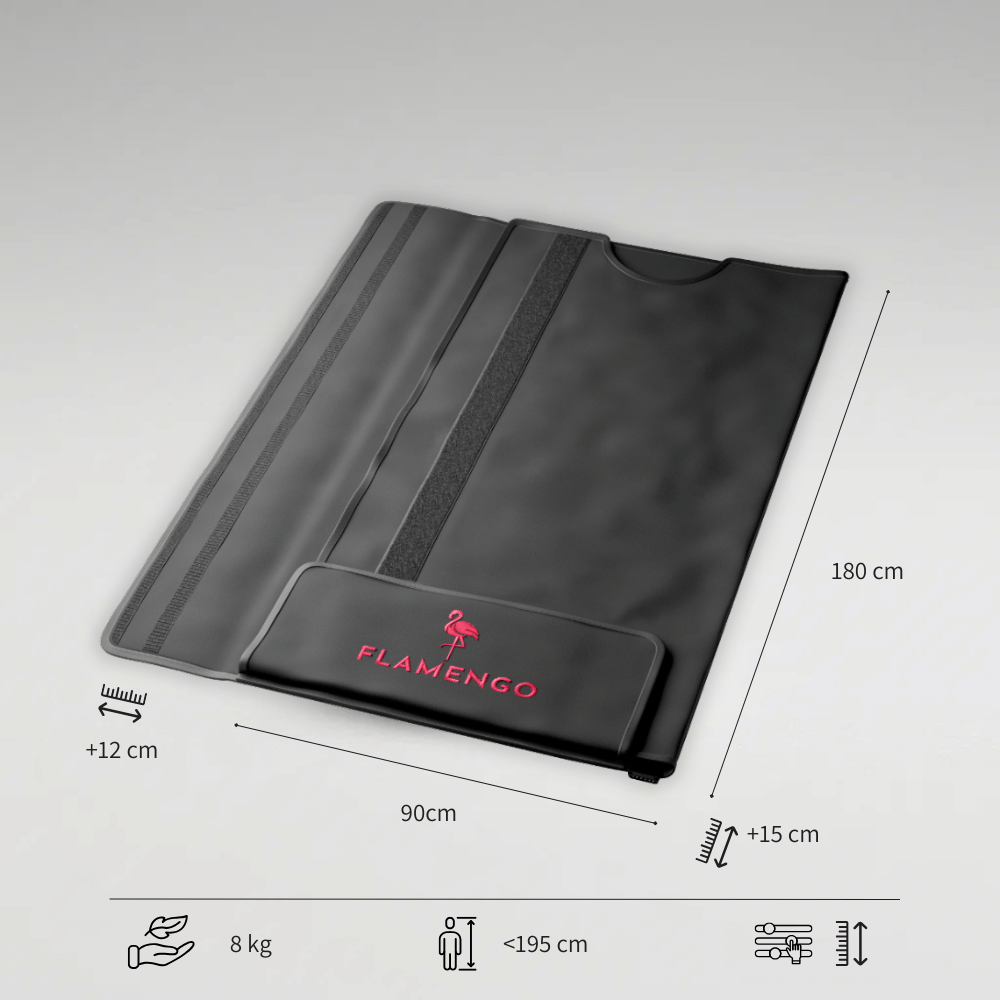
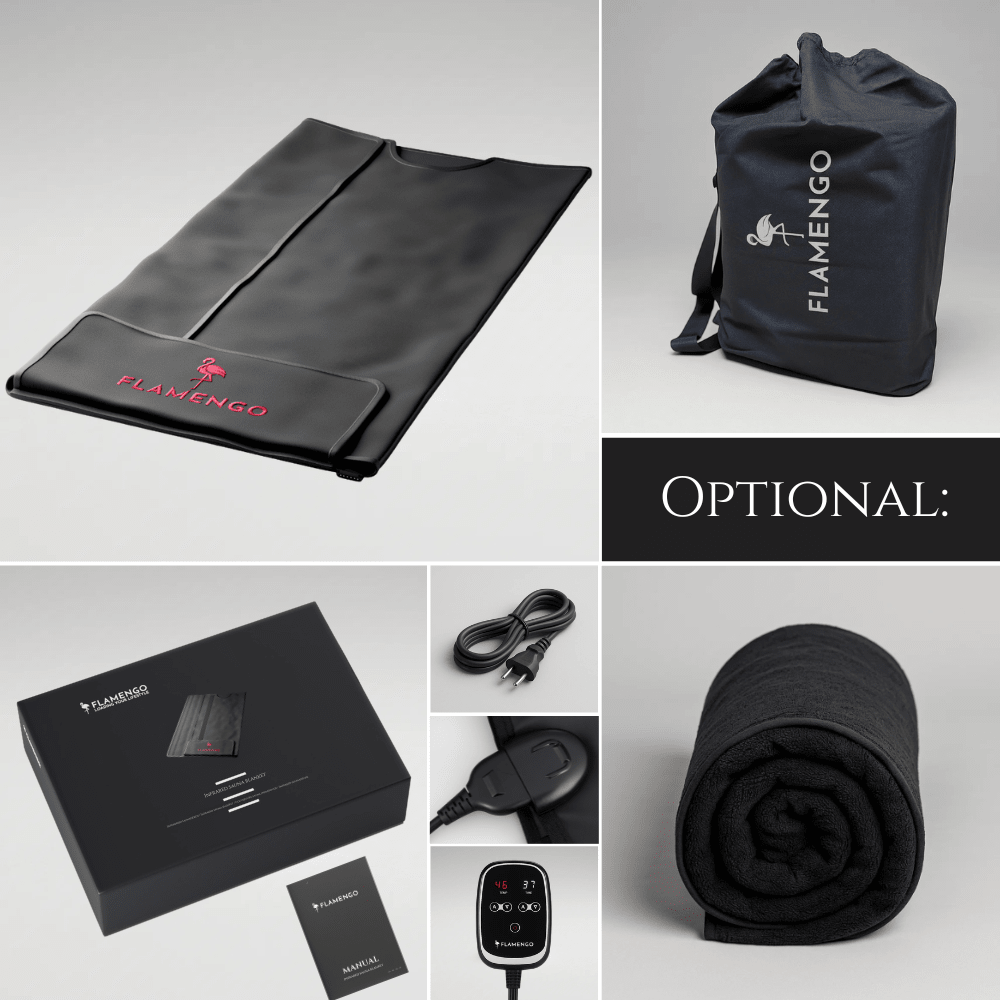
The Flamengo combination: sauna blanket for whole-body warmth, InfraPulse for targeted therapy.
The Flamengo sauna blanket – whole-body warmth
With joint pain in several places (typical of menopausal symptoms, fibromyalgia, polyarthrosis), whole-body heat therapy is more effective than a local approach. The Flamengo sauna blanket emits mainly far infrared (FIR), with a small measured share of mid-infrared (MIR); the radiation warms the skin, after which the heat spreads deeper into the tissue via the circulation (more about the measured spectrum). A session of 30–45 minutes at 55–65°C gives hours of relief.
The Flamengo InfraPulse – targeted at a specific joint
With pain in one joint (knee, shoulder, elbow), a targeted device is more efficient. The Flamengo InfraPulse combines infrared heat with gentle vibration massage – sessions of just 5–10 minutes are already noticeable. Especially effective for osteoarthritis, after injuries or in early-stage rheumatism.
Hot & Cold Wrap Pack – for changing symptoms
For acute symptoms (swelling, redness), cold is better than heat. The Hot & Cold Wrap Pack gives you both options – a cold pack for acute symptoms, a heat pack for chronic pain. Suitable for specific areas.
When to see your GP?
A lot of joint pain can be managed well with self-care. But there are signals you should not ignore:
- Sudden severe pain with swelling, redness and warmth (possibly infection or gout);
- Pain with fever or feeling generally unwell;
- Stiffness lasting more than 1 hour after getting up (possibly rheumatism);
- Symmetrical pain (both hands, both feet);
- Unexplained weight loss combined with joint pain;
- Pain that keeps you awake at night and does not go away;
- A joint that locks or feels unstable.
Book an appointment if you have:
- Complaints that persist for more than 6 weeks despite self-care;
- Increasing limitations in daily activities;
- Pain that gradually affects more joints;
- To find out whether medication may be the cause.
Your GP can request blood tests (inflammation markers, rheumatoid factors, vitamin D), consider imaging (X-ray, ultrasound) and refer you to a rheumatologist, orthopaedic surgeon or physiotherapist.
Frequently asked questions about joint pain
Over 50: osteoarthritis is by far the most common cause (wear of the cartilage). In women around the menopause: hormonal joint pain due to falling oestrogen. In younger people: often overuse or injuries. With generalised pain: consider fibromyalgia or vitamin D deficiency.
A combination of: heat therapy for immediate relief, exercise to strengthen the muscles around the joints, weight management if overweight, an anti-inflammatory diet and targeted physiotherapy. No single approach works on its own – the combination makes the difference.
Heat works best for chronic joint pain (osteoarthritis, rheumatism at rest, menopausal symptoms, fibromyalgia) – it relaxes the muscles and improves circulation. Cold works better for acute pain with swelling and redness (gout, injury, inflammatory phase of rheumatism). If in doubt: heat for stiffness, cold for swelling.
Yes, joint pain during the menopause occurs in 50–70% of women aged around 45–55. The hormone oestrogen has a protective effect on cartilage and pain modulation – as levels fall, this protection decreases. It often improves after the menopause once hormone levels stabilise. Strength training, vitamin D and heat therapy help significantly.
With evidence: turmeric (curcumin) as an anti-inflammatory, omega-3 fish oil, ginger extract, boswellia extract. They work more slowly than paracetamol or NSAIDs but without long-term side effects. Combine with heat therapy and exercise for the best effect. Discuss with your GP if you take other medication.
Refined sugar, processed meat (sausages, ham, hot dogs), fried food, trans fats (processed snacks), excessive alcohol and possibly red wine. These fuel chronic inflammation. With osteoarthritis: some people also react to the nightshade family (tomato, pepper, aubergine) – this varies from person to person. Try avoiding them for 4 weeks to see the effect.
Stress does not directly cause joint pain but intensifies existing complaints in several ways: cortisol increases inflammation, the muscles around the joints tense up and the pain threshold drops. Stress management (meditation, heat therapy, sleep) is therefore part of a complete approach.
Heat therapy: often noticeable within 20–30 minutes. Exercise and physiotherapy: 4–6 weeks for a lasting effect. Weight loss: from 5 kg lost, usually noticeable within 2–3 months. Anti-inflammatory diet: 4–8 weeks for structural improvement. Give the approach at least 8 weeks before drawing conclusions.
Conclusion
Joint pain is a common complaint with various causes – from osteoarthritis and rheumatism to menopausal symptoms and overuse. Always start by identifying the cause before treating, because what helps with osteoarthritis does not always work for rheumatism or fibromyalgia. The seven natural ways – heat therapy, exercise, weight management, an anti-inflammatory diet, supplements, physiotherapy and targeted massage – together often achieve more than medication alone. Start by combining at least 3 approaches. With complaints lasting more than 6 weeks or acute signals (swelling, redness, fever): see your GP. Heat therapy with an infrared sauna blanket or the targeted InfraPulse is a valuable addition to your treatment plan – suitable for daily use and with a measurable effect within weeks.
Tackle joint pain at the source with heat that relaxes the muscles and improves circulation.
View the infrared sauna blanket →This article is for information only and does not replace medical advice. Always contact your GP if symptoms persist. Flamengo supplies wellness products for self-management of complaints – not medical devices.