Is the sauna good for your skin? Acne, eczema and collagen

Is the sauna good for your skin? What heat does for acne, eczema and wrinkles
The sauna has a reputation as skincare — but does it really work, and for which skin problems does it help or not? In this article, a clear guide with realistic expectations.
The sauna can contribute to healthier skin in several ways: from deeper cleansing to more collagen production. But the sauna isn't suitable for every skin condition. We discuss per problem what the sauna can do — and what it definitely can't.
Is the sauna good for your skin?
The short answer: yes, when used correctly the sauna can support your skin in various ways. The heat improves circulation, opens the pores and stimulates collagen production. But there are also situations in which the sauna actually backfires — with active skin inflammation or severely dry skin, for example.
An infrared sauna or sauna blanket works differently from a traditional sauna. Infrared heat penetrates into the skin and the tissue directly beneath it, whereas a traditional sauna works mainly on the outer skin layer through hot air. That's why many people choose infrared to improve their skin.

Six scientifically supported effects of regular sauna use on the skin
The 6 effects of the sauna on your skin
Collagen is the protein that keeps skin firm and elastic. From around age 25, production gradually declines, resulting in wrinkles and sagging. Heat stimulates the fibroblasts — the cells that produce collagen — to become more active. With regular use (8 to 12 weeks), many people see an improvement in elasticity and firmness.
The heat widens the blood vessels in the skin and increases blood flow. Skin cells receive more oxygen and nutrients, and waste products are removed faster. The result: a natural glow, often visible as a healthy flush right after a session.
In the sauna your pores open and the skin expels sebum, dead skin cells and impurities. This works as a natural deep cleanse. Important: rinse your skin straight after the session, otherwise released impurities can find their way back into the pores.
Heat can dampen inflammatory responses in the body. For skin conditions in which inflammation plays a role — such as mild eczema or rosacea — this can be soothing. Note: no sauna during an active flare-up.
Chronic stress raises cortisol, and cortisol disrupts the skin barrier and sebum production. The result: stress acne and dull skin. The sauna activates the parasympathetic nervous system, lowers cortisol and can thus indirectly contribute to calmer skin.
The combination of heat, circulation and hormetic stress prompts the skin to renew its cells faster. Old, damaged skin cells are replaced by new ones more actively. In the long term this contributes to a more even complexion and less visible pigmentation spots.
Sauna for skin conditions — what works and what doesn't?
The sauna has a different effect for each skin problem. Sometimes supportive, sometimes aggravating. Below, condition by condition, what practice shows.

The effect of sauna use differs per skin condition — look at the nuance case by case
Sauna for acne and spots
With mild acne, the sauna can help: it opens blocked pores, clears sebum and, through stress reduction, reduces the formation of new spots. Results are usually visible after 4 to 8 weeks of regular use (2 to 3 sessions a week).
Don't: with active cystic acne or inflamed skin. The heat can make inflammation worse. Wait until the active phase has passed and, if in doubt, consult your skin therapist.
Sauna for eczema
Eczema is a complex skin condition and the reaction to the sauna is very personal. For some people it is soothing — the mild warmth calms itching, and the dry sweating environment of an infrared sauna is gentler on the skin than humid heat. For others it actually makes things worse — sweating can irritate and speed up drying of the skin barrier.
Important: never during an active flare-up. And always consult your dermatologist beforehand if you take medication or have atopic eczema.
Sauna for psoriasis
With psoriasis, the sauna can be supportive: circulation stimulates skin renewal and stress reduction reduces flare-ups. The sauna is not a replacement for medical treatment — it complements what your doctor or dermatologist advises.
Many people with psoriasis find infrared milder than a traditional sauna, because the lower temperature and dry environment put less strain on the affected patches.
Sauna for anti-ageing and wrinkles
This is where the effect is strongest: regular sauna use stimulates collagen and improves circulation — two important factors for youthful skin. Realistic expectation: visible improvement after 8 to 12 weeks with 2 to 3 sessions a week. Combine with good hydration and sun protection for the best result.
Sauna for rosacea
Caution is needed with rosacea. Heat is a known trigger for flare-ups. If you have rosacea, it's better to choose an infrared sauna on the lowest setting (40 to 45 degrees) with short 15-minute sessions — or skip the sauna altogether. Test carefully first and stop immediately if irritation occurs.
What is mottled skin after a sauna?
A common question: after a sauna the skin sometimes looks mottled or blotchy, with red and white patches. This is called cutis marmorata and is usually harmless.
It happens because the blood vessels in the skin react unevenly to the heat. Some widen quickly (red patches), others respond more slowly (pale patches). The pattern usually disappears within 30 to 60 minutes after the session.
Dry skin from the sauna — prevention and care
The biggest complaint after sauna use is dry or tight skin. Sweating makes you lose fluid, and if you don't replace it, both your body and your skin dry out. Fortunately this is easy to prevent.
Before the session
Drink at least one large glass of water (250 ml) half an hour before the session. Avoid alcohol — it speeds up fluid loss and strains your heart in the heat.
During the session
Start at a lower temperature if you have sensitive skin. Keep your session to 20 to 30 minutes for infrared, 10 to 15 for a traditional sauna. Stop immediately if you feel dizzy or dry.
After the session
Drink plenty of water (300 to 500 ml) and apply a moisturising cream to slightly damp skin within 15 minutes — the moisture absorbs better that way. Avoid soap and harsh cleansers; they strip the natural skin oils you need after sweating.
When is the sauna not suitable for your skin?
- Active skin inflammation or open wounds
- Cystic acne in a flare-up
- Eczema or psoriasis in an active phase
- Rosacea (only test at a very low temperature)
- Recent cosmetic procedures (peel, laser, fillers — wait at least 2 weeks)
- Recently treated sunburn
- Use of retinol or other harsh active ingredients on the same day
Traditional sauna versus infrared for the skin
Both can benefit the skin, but they work differently. Below is the practical comparison.
| Aspect | Traditional sauna | Infrared sauna / blanket |
|---|---|---|
| Temperature | 80–100 °C, hot air | 40–65 °C, mild direct heat |
| Effect on the skin | Mainly on the skin surface | Penetrates the skin and underlying tissue |
| For sensitive skin | ✗ Often too intense | ✓ Better tolerated |
| For eczema and psoriasis | ✗ Humid heat can irritate | ✓ Dry, mild heat |
| For anti-ageing | ✓ Suitable | ✓ Deeper effect |
| Home use possible | Only with a cabin (€2,000+) | ✓ Also with a sauna blanket |
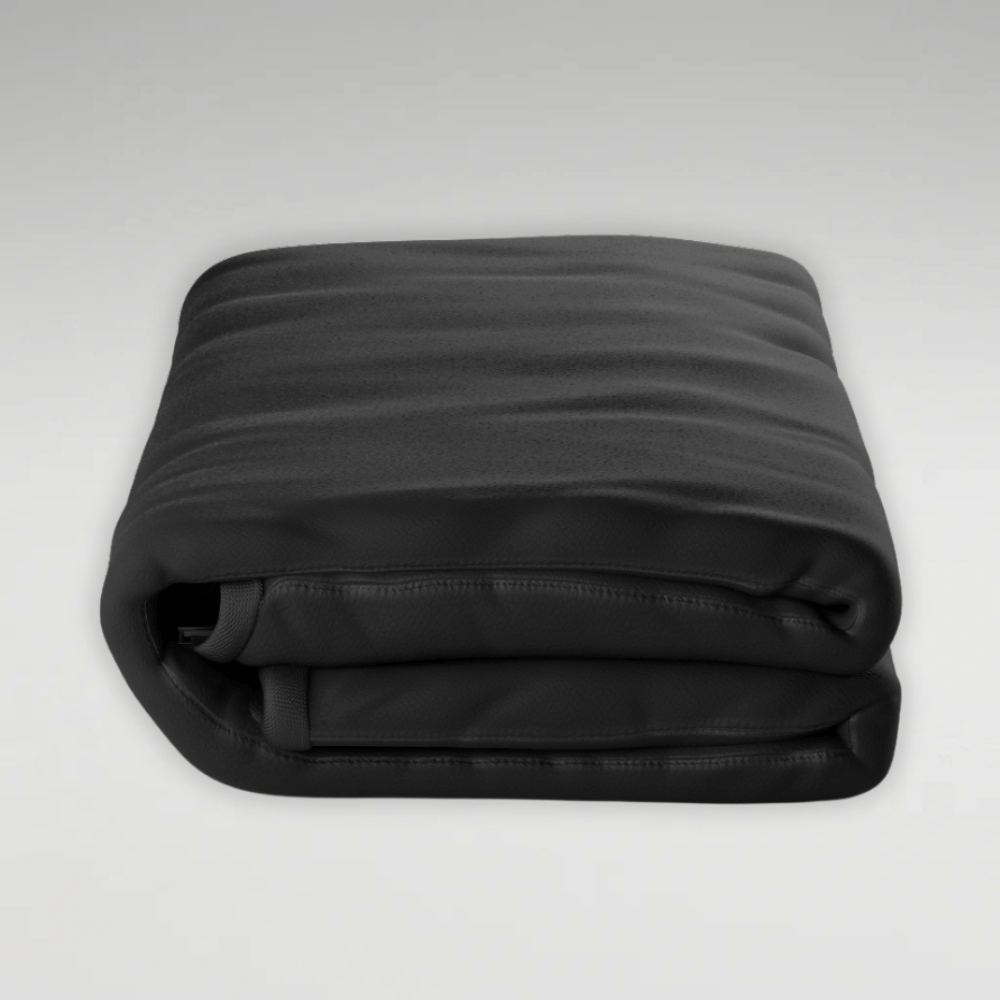
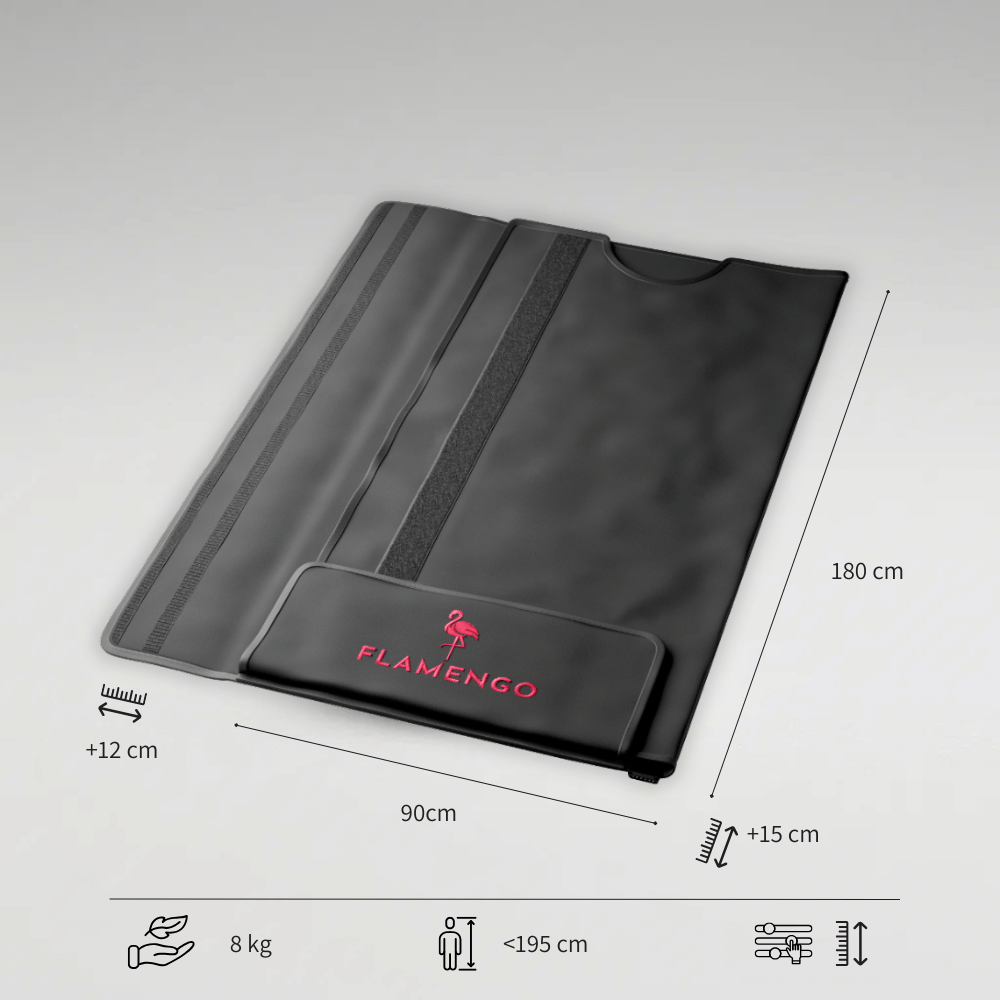
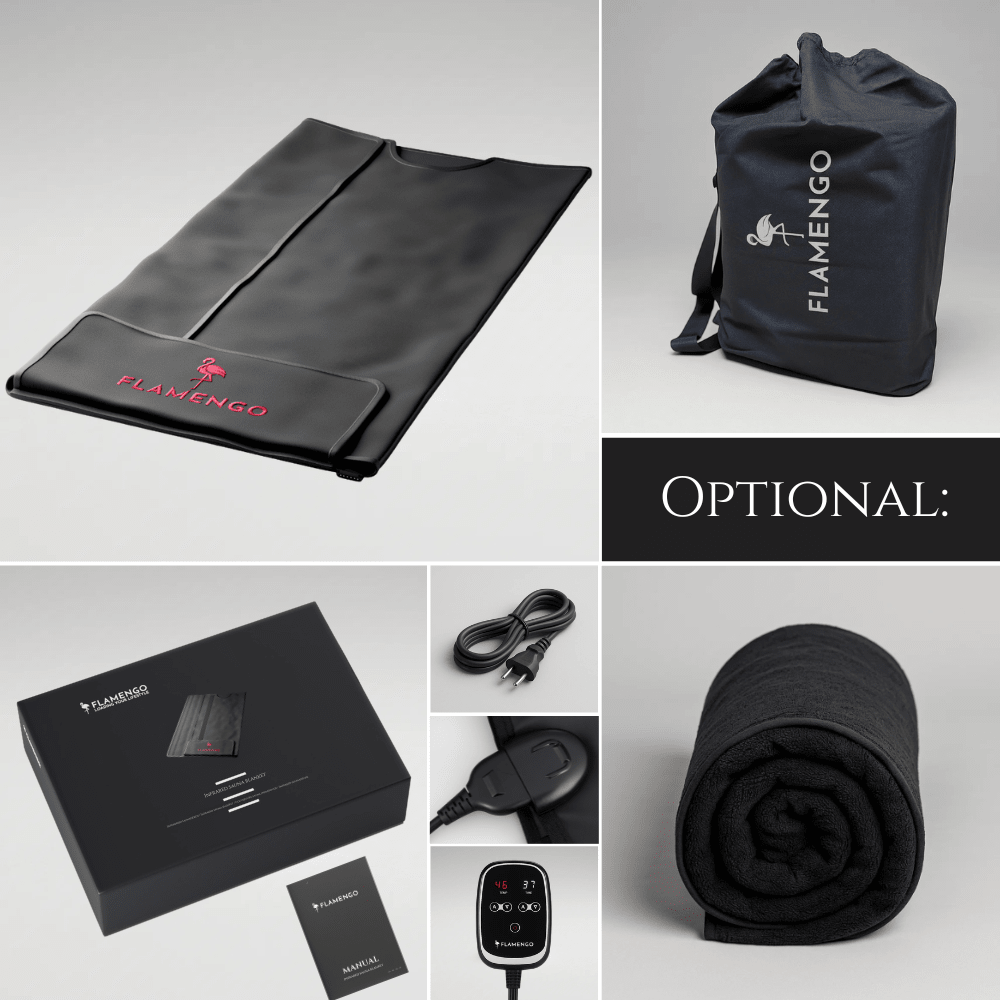
For daily skin maintenance at home, many people choose an infrared sauna blanket: the same infrared technology as a cabin, but without the installation and usable on the sofa or in bed.
Frequently asked questions about sauna and skin
Yes, when used correctly. The sauna stimulates collagen production, improves circulation and cleanses the pores through sweating. The effect is strongest with regular use (2–3 sessions a week) over a period of 8 to 12 weeks. Not suitable during active skin inflammation or flare-ups of eczema and psoriasis.
The reaction to the sauna differs from person to person. For some, the mild warmth of an infrared sauna soothes itching and inflammation. For others, sweating worsens the irritation. Never use it during an active flare-up, and always consult your dermatologist if you take medication.
With mild acne, the sauna can help by opening pores, clearing sebum and lowering stress. The effect is usually visible after 4 to 8 weeks with 2–3 sessions a week. Don't use it with cystic acne in a flare-up — heat can then worsen the inflammation.
A mottled or blotchy skin pattern after a sauna is called cutis marmorata and occurs because blood vessels react unevenly to heat. It is usually harmless and disappears within an hour. If it persists or is painful, consult a doctor.
For a visible effect on the skin, 2 to 3 sessions a week for at least 8 to 12 weeks are recommended. An infrared sauna blanket makes this frequency easier because you can do it at home — no travel time, no waiting for an appointment.
Only with insufficient hydration. Drink plenty of water before and after every session and apply a moisturising cream to damp skin within 15 minutes. Avoid soap and harsh cleansers straight after the sauna — they strip the natural protective layer.
Yes, heat activates fibroblasts — the cells that produce collagen — and improves circulation in the skin. With regular use over 8 to 12 weeks, an improvement in elasticity is visible. The sauna works best combined with good nutrition (vitamin C, protein) and enough sleep.
Outside an active flare-up, the sauna can be supportive for psoriasis: heat stimulates skin renewal and stress reduction reduces triggers. Infrared is often experienced as more pleasant than a traditional sauna. The sauna is a supplement, not a replacement for medical treatment.
Conclusion
The sauna can be a valuable part of your skincare — as long as you approach it smartly. For anti-ageing, mild acne and general skin improvement, it works with regular use. With eczema, psoriasis and rosacea, caution is needed and consulting a dermatologist is wise. Always combine the sauna with good hydration, protective skincare and a healthy diet for the best result.