Preventing muscle pain: tips to reduce muscle pain

Preventing muscle soreness — the complete guide to prevention
Muscle soreness is not an inevitable by-product of exercise. With the right prevention before, during and after training, you avoid a lot of discomfort — and find it easier to build towards new results.
Preventing muscle soreness is possible — but it takes a well-thought-out approach before, during and after training. In this article: what muscle soreness actually is, how long it lasts, and the eight most important tips to prevent and reduce muscle soreness after exercise. Plus the Flamengo prevention toolkit with six tools that can support you every day.
What exactly is muscle soreness?
In scientific research this process has been mapped out extensively: muscle soreness is caused by tiny micro-tears in the muscle fibres and surrounding connective tissue, especially after intensive or unaccustomed exertion. The body responds with a mild inflammatory reaction — which causes the pain, stiffness and sometimes slight swelling that we recognise as muscle soreness.
There are two types of muscle soreness you will often come across:
- Acute muscle soreness — directly during or after training. Caused by a build-up of lactic acid and a temporary lack of oxygen. Usually disappears within an hour.
- DOMS (Delayed Onset Muscle Soreness) — the delayed muscle soreness that peaks 24 to 48 hours after training. Caused by the micro-tears and the inflammatory reaction. Lasts 2 to 5 days.
In this article we focus mainly on preventing DOMS — the muscle soreness that can limit your activities for days. With the right approach you can reduce muscle soreness to a minimum, or almost eliminate it completely.
How long does muscle soreness last?
| Type of muscle soreness | Duration | When to be concerned? |
|---|---|---|
| Acute muscle soreness | Up to 1 hour after training | With stabbing or burning pain |
| Mild DOMS | 1 to 2 days | Normal — no action needed |
| Moderate DOMS | 2 to 4 days | If your range of movement is limited |
| Severe DOMS | 4 to 7 days | Possibly trained too intensively |
| Prolonged muscle soreness (>1 week) | More than 7 days | Consult a doctor or physiotherapist |
The duration depends on training intensity, how well prepared you were, your nutritional status and your recovery routine. The good news: with smart planning you can shorten this considerably.
Preventing muscle soreness in 3 phases
Preventing muscle soreness does not start after training — it starts before you even put on your trainers. The three phases in which you can actively make a difference:

The three phases in which you can prevent muscle soreness — and how much impact each phase has
Key takeaway: half of muscle soreness prevention lies in what you do before training. If you only focus on recovery afterwards, you miss out on most of the gains.
The 8 most important tips to prevent muscle soreness
A good warm-up gradually raises your heart rate, increases blood flow to the muscles and prepares the nervous system. Start with 5 minutes of light cardio (walking, cycling, skipping) and then do 5 minutes of dynamic stretches that activate the muscles you are going to use. Do not skip this step — a good warm-up alone prevents a considerable amount of muscle soreness.
The biggest cause of extreme muscle soreness: too big a jump in intensity, volume or weight. The rule of thumb from sports science: do not increase volume or intensity by more than 10% per week. If you start a new exercise or training style, deliberately do the first 2-3 sessions at 60-70% of what you think you can manage. Your muscles adapt — give them that chance.
Poor technique loads muscles in unaccustomed ways — leading to extreme muscle soreness and a risk of injury. Have your exercises checked by a trainer, watch instruction videos, and do not be afraid to train with less weight or intensity to get the technique right first. If in doubt: ask an experienced athlete or professional for feedback.
Before training: a light meal with complex carbohydrates 1-2 hours beforehand (porridge, brown rice, wholemeal bread). After training, within 1 hour, 20-30 grams of protein (quark, chicken, eggs, protein shake) plus some fast carbohydrates to replenish your glycogen stores. During the day at least 2 litres of water — dehydration makes muscle soreness considerably worse.
After training, 5-10 minutes of cool-down: easy cycling, walking or jogging to bring your heart rate gradually back to normal. Then 5-10 minutes of static stretching of the muscles you have worked — especially useful for limiting stiffness the next day. No extreme stretches, just hold comfortably for 20-30 seconds per muscle group.
Your body recovers most effectively during sleep. The growth hormone that drives muscle growth and repair peaks during deep sleep. Aim for 7-9 hours of sleep per night. Plan at least one rest day per week — more if you train intensively. Overload from too little recovery is a guaranteed route to chronic muscle soreness and injuries.
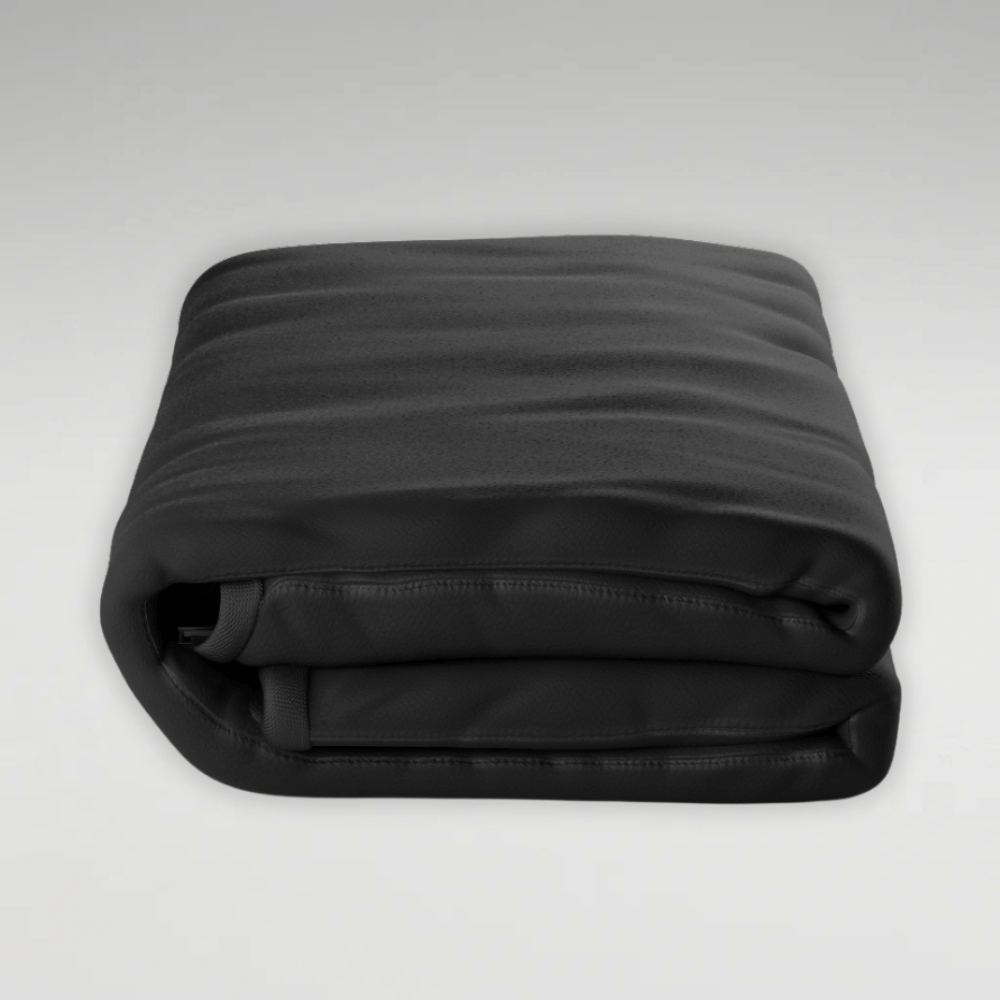
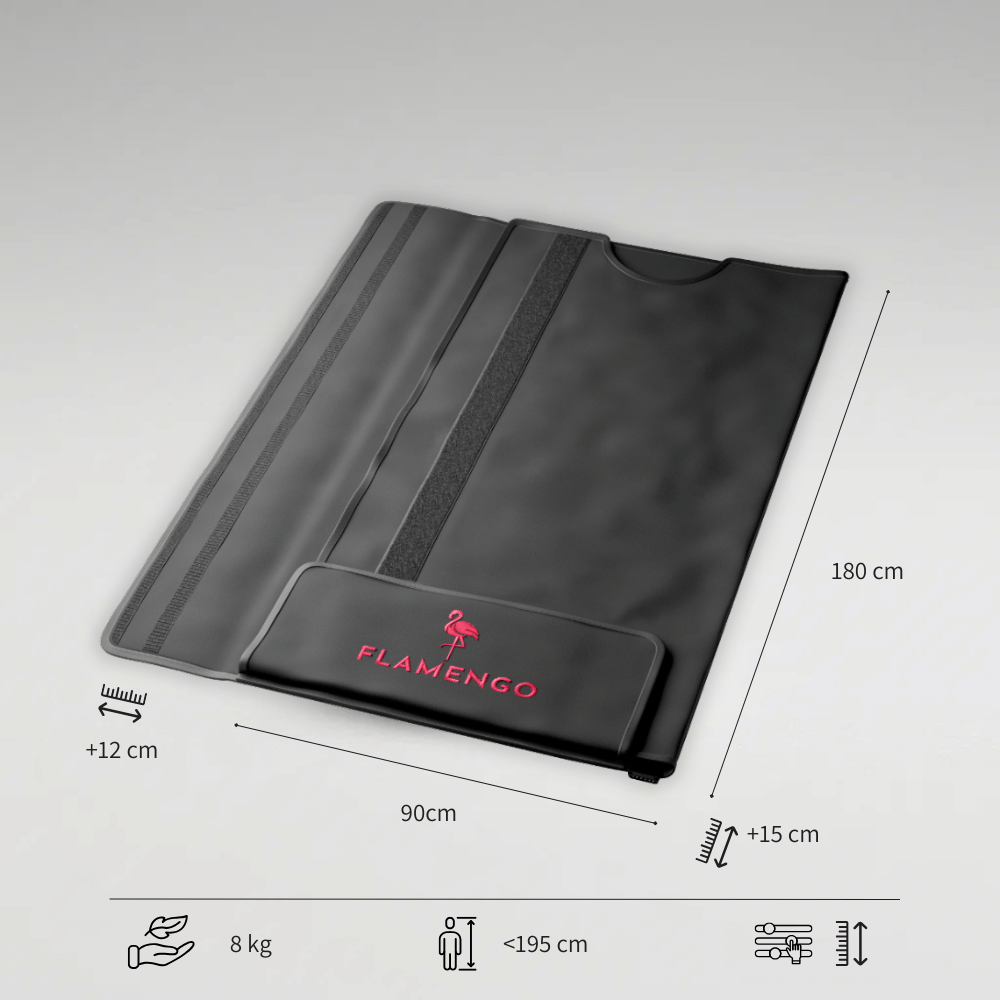
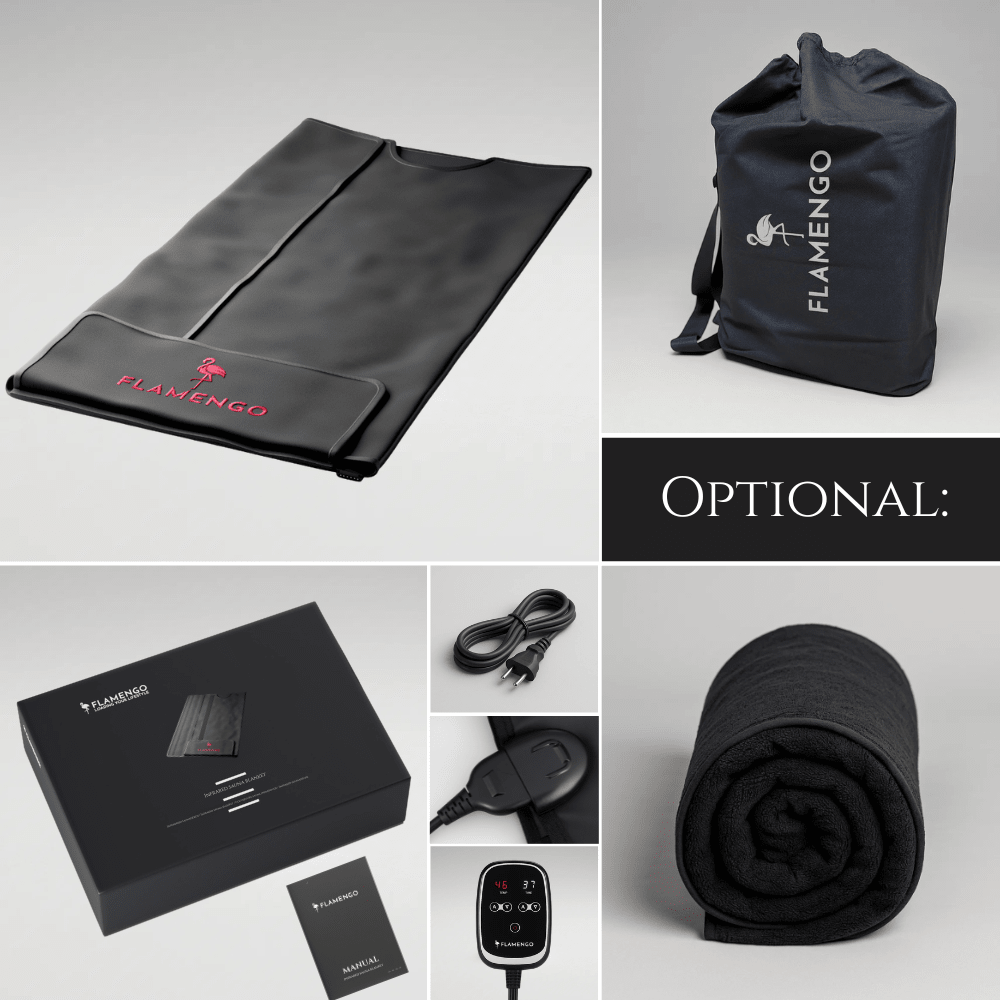
Regular heat therapy — for example 20-30 minutes in an infrared sauna or sauna blanket 2-3 times a week — keeps your muscles supple, stimulates circulation and considerably reduces the chance of muscle soreness. Especially in the evening after training, the combination is powerful: better circulation plus deeper sleep that night. Do not just react to muscle soreness — use heat preventively for lasting prevention.
After above-average hard training, a cold shower or ice bath is one of the most researched methods for limiting muscle soreness. Cold-water immersion (2-5 minutes at 10-15 °C) slows the inflammatory reaction and reduces DOMS. The Flamengo PolarPure ice bath is designed specifically for this: thermally insulated, easy to set up in the garden or bathroom, and with the Wim Hof method proven effective for athletes who want to optimise their recovery.
The Flamengo prevention toolkit
At Flamengo we have been working for years with athletes of all levels on optimal recovery and preventing muscle soreness. Our toolkit consists of six tools, each with its own role — depending on your sport, situation and preference. For most athletes, a combination of two or three tools is the sweet spot for lasting results.

Six Flamengo tools for preventing and reducing muscle soreness
When to use which tool?
| Situation | Best tool | Effect |
|---|---|---|
| Before heavy strength training | Mini Massage Gun | Activates muscles before training |
| Directly after hard training | PolarPure ice bath | Reduces inflammation, prevents DOMS |
| 30-60 minutes after training | Sauna blanket | Circulation, relaxation, better sleep |
| After running or cycling | Air Recovery Boots | Leg compression, lymphatic drainage |
| Painful knee, shoulder, elbow | InfraPulse | Targeted infrared vibration massage |
| Back, neck or shoulder complaints | InfraStretch mat | Heat + stretching for the upper body |
What to do if you still get muscle soreness?
Still got muscle soreness despite everything? No reason to panic — it is a normal process. What helps:
The first 24 hours
Rest the most affected muscles, but keep moving lightly — active recovery works better than lying completely still. Walking, light cycling or swimming brings fresh oxygen and nutrients to the muscles. Eat protein-rich food, drink enough water, and schedule a cold shower or a short session in the Flamengo PolarPure ice bath if the swelling is significant — cold therapy slows the inflammatory reaction most effectively in this phase.
24 to 72 hours
The peak of DOMS. Heat therapy is now more effective than cold. A 20-30 minute Flamengo sauna blanket session increases circulation and speeds up the removal of waste products — exactly what your muscles need now. For specific pain points in the knee, shoulder or elbow: the InfraPulse combines infrared heat with vibration on that exact spot. For heavy legs after running or cycling, the Air Recovery Boots are ideal — 20 minutes of compression makes an enormous difference.
After 72 hours
Muscles start to become stronger than before — the so-called supercompensation effect. Gradually start training again, but reduce the intensity by 20-30% for the first session to avoid overload. A short session with the Mini Massage Gun before training helps to activate the muscles properly again. Want to dive deeper into recovery strategy? Read our guide on supporting muscle recovery with seven proven methods.
When is muscle soreness a cause for concern?
- Muscle soreness lasting longer than 7 days
- Sharp, stabbing pain instead of diffuse muscle soreness
- Visible swelling or dark discolouration of urine
- Muscle soreness combined with fever or nausea
- Pain with specific movements that does not go away
- Muscle soreness on only one side or in a specific joint
In rare cases, extreme muscle soreness after hard training can indicate rhabdomyolysis — a serious condition in which muscle tissue breaks down. If in doubt, always contact a doctor.
Frequently asked questions about preventing muscle soreness
Preventing muscle soreness starts before training: a good 10-minute warm-up, gradually building up intensity, correct technique and enough protein and water. During training: do not push past your limits, drink, maintain correct technique. After training: cool-down, stretching, protein within 1 hour, and possibly heat or cold therapy. Follow these steps and you will prevent half of all muscle soreness.
Acute muscle soreness (during or directly after training) disappears within an hour. DOMS (delayed muscle soreness) peaks 24-48 hours after training and usually lasts 2 to 5 days. After intensive training it can last up to a week. If muscle soreness lasts longer than 7 days, or is sharp and localised, consult a doctor or physiotherapist.
The most effective tips against muscle soreness: a sufficient warm-up, gradual build-up, correct technique, protein within 1 hour after training, enough sleep, regular heat therapy (sauna or sauna blanket), cold therapy after intensive sessions, and listening to your body. It also helps to build recovery tools such as a mini massage gun or recovery boots into your routine — especially if you train intensively.
Yes, regular sessions in an infrared sauna (2-3 times a week, 20-30 minutes) keep circulation up, relax muscles preventively and strengthen the body's natural recovery capacity. The Flamengo sauna blanket makes this accessible at home: on average €0.30 in electricity per session and no travel time. With regular use, our customers notice considerably less muscle soreness after training within 2-3 weeks — and more energy and better sleep as a bonus.
Protein-rich food helps most: chicken, fish, eggs, quark, pulses or a protein shake. Aim for 20-30 grams of protein within 1 hour after training. Omega-3 fatty acids (oily fish, linseed) also have an anti-inflammatory effect. Sufficient complex carbohydrates (porridge, sweet potato) replenish your glycogen. Do not forget to drink plenty of water — dehydration makes muscle soreness considerably worse.
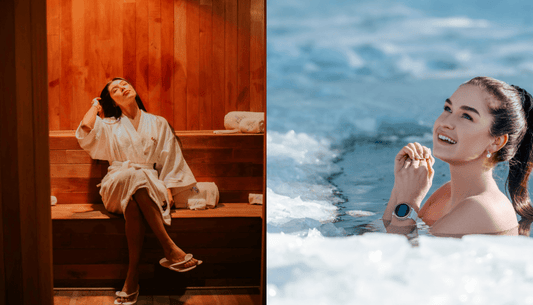
Both are effective, but for different phases. Directly after intensive training: an ice bath (2-5 minutes at 10-15 °C) slows the inflammatory reaction and reduces DOMS. 24-72 hours later: heat therapy (sauna blanket, warm bath) is more effective for removing waste products and relaxing muscles. Most powerful is contrast therapy: alternating between warm and cold — the best of both worlds.
As a beginner, the most important rule is: build up gradually. Start at 60-70% intensity, train a maximum of 3 times a week in the first month, and allow at least a day's rest between sessions for the same muscle group. In addition: a good warm-up, enough protein, water and sleep. A little muscle soreness in the first weeks is normal — extreme muscle soreness means you went too fast. If in doubt: ask a trainer for guidance.
Mild muscle soreness is no problem for exercise, provided you train other muscle groups or lower the intensity. Active recovery (light movement) even helps you recover faster than complete rest. With moderate to severe muscle soreness: only train other muscle groups or do light cardio. With severe DOMS that limits your range of movement: take at least a day's rest before training intensively again.
Conclusion
Preventing muscle soreness is a combination of smart training, good nutrition and targeted recovery tools. Half of prevention lies in what you do before training — warm-up, build-up, technique. The rest comes from smart choices during and straight after. The Flamengo prevention toolkit with six tools each supports its own aspect of recovery: the sauna blanket for heat therapy, the PolarPure ice bath for cold therapy, Air Recovery Boots for the legs, InfraPulse for specific joints, the Mini Massage Gun for activation and the InfraStretch mat for the upper body. Start with the tool that best suits your sport and needs — consistency over intensity, that is the real key.