10 Relaxing Activities to Reduce Stress | Flamengo

Relaxing activities — 10 ways to reduce stress
Busy working days, social obligations and an endless to-do list. Everyone deals with stress — and with the right activities you can bring your body and mind back into balance. Ten practical ways, for every personality and schedule.
Relaxing activities come in many forms — from a short breathing exercise to an hour in nature. What works best differs from person to person: one relaxes by moving, another precisely by sitting still. In this article: 10 science-backed ways to reduce stress, divided into four categories (bodywork, mental, creative, outdoors), with a practical example ritual and handy tips for each type.
Why relaxing activities are so important
Stress is a biological response that mobilises our body — useful in acute situations, harmful when it lasts a long time. Chronic stress causes raised cortisol, higher blood pressure, poorer sleep, a weakened immune system and mental exhaustion. Regular relaxation isn't a luxury — it's an essential counterbalance.

What chronic stress does vs what regular relaxation does to your body.
The good news: you don't need to invest hours a day. Research shows that even 15–30 minutes of focused relaxation a day has a measurable effect on cortisol levels, heart rate variability and sleep quality. The trick is regularity — not one long wellness day a month, but a short session every day.
The 10 most effective relaxing activities
The 10 activities below are divided into four categories. Choose a combination from at least two categories for the best effect — for example bodywork plus something mental, or outdoors plus creative.

10 activities in 4 categories — choose a combination that suits your lifestyle.
Yoga combines movement, breathing and attention — a complete formula for relaxation. Even a short 15–20 minute session (think simple yin yoga or a few sun salutations) noticeably reduces muscle tension and brings more mental calm. Don't do yoga classes? A simple stretching routine before bed works fine too.
Meditation is the oldest and best-researched relaxation technique. Apps like Headspace, Calm and Insight Timer make it easy to start — 10 minutes a day is a good starting point. Mindfulness goes a step further: consciously paying attention to what you do, feel and think. Effect: less rumination, better mood, more focus.
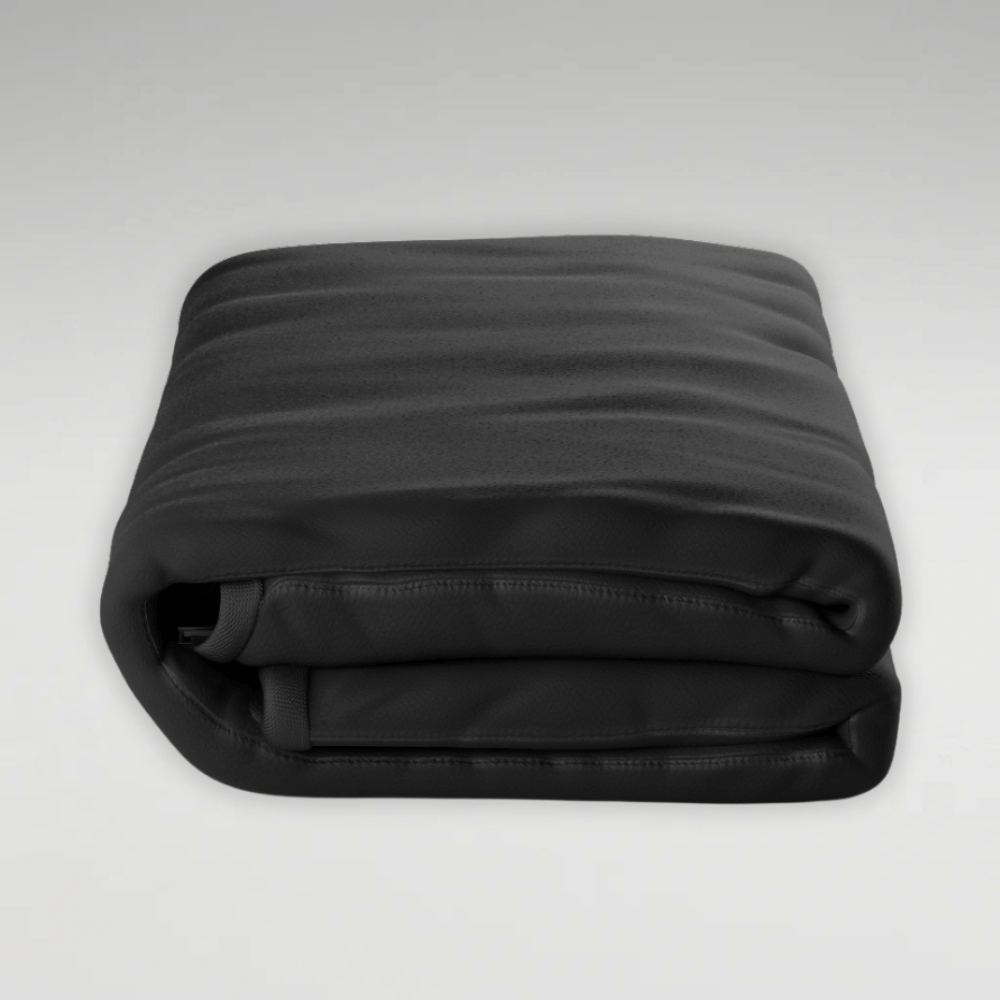
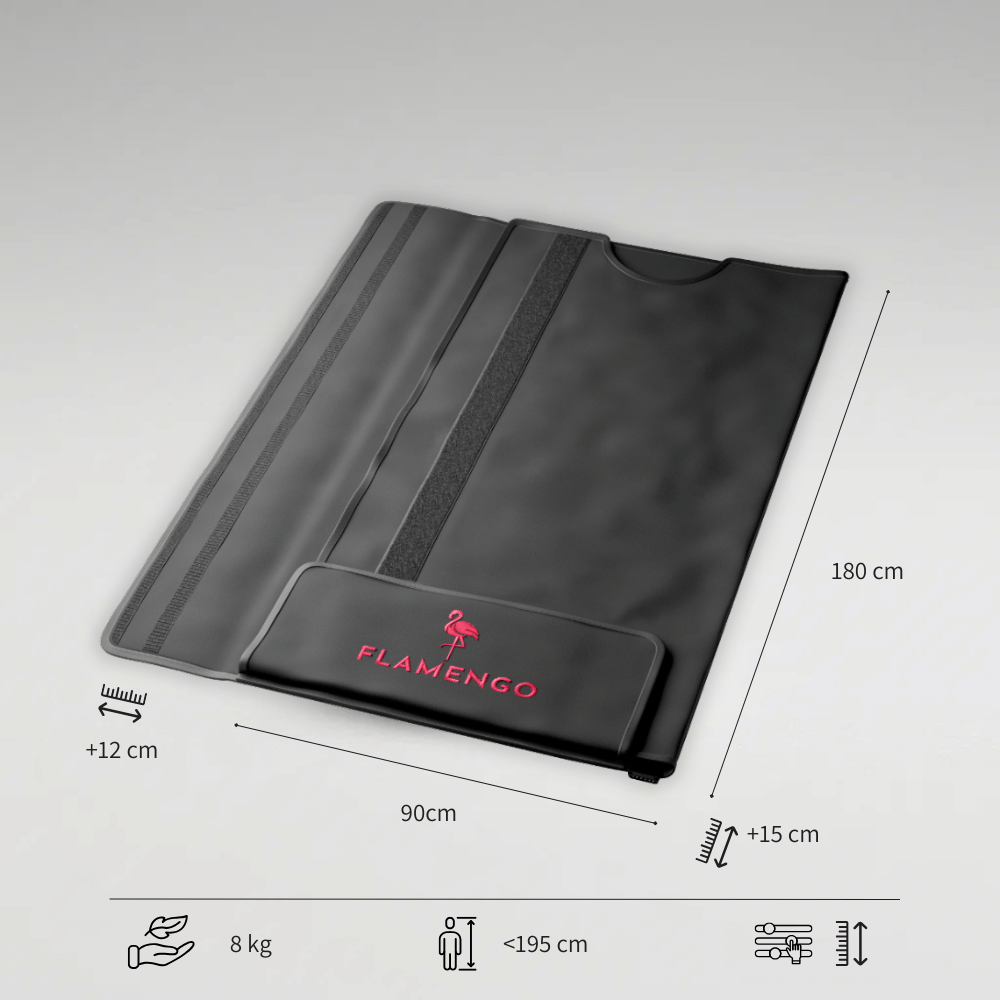
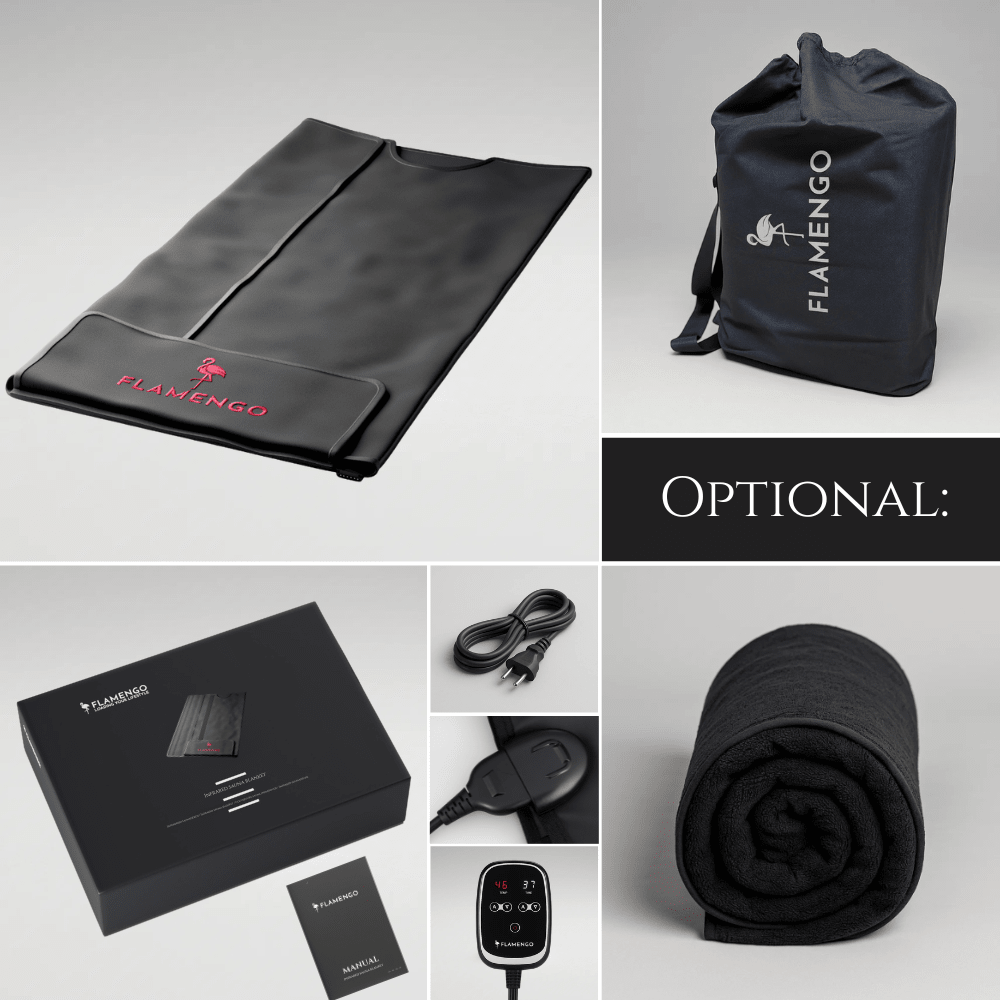
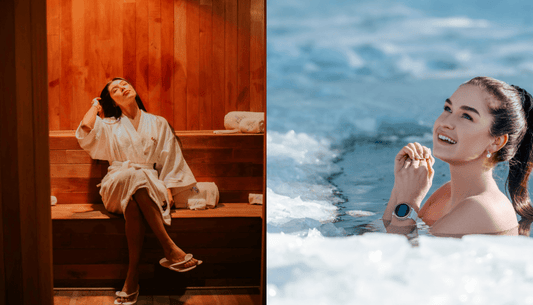
Heat therapy has a directly relaxing effect on the nervous system. The combination of warmth, sweating and quiet time lets body and mind come to rest. A 30–45 minute session in an infrared sauna blanket measurably lowers cortisol and stimulates the production of endorphins. Ideal as an evening ritual — the drop in body temperature afterwards also helps you fall asleep.
The fastest way to bring your body into 'rest and recover' mode. Box breathing (4 sec in – 4 hold – 4 out – 4 hold) or the 4-7-8 technique work within 2–3 minutes — handy for acute stress. Also useful for falling asleep: 5 minutes of 4-7-8 breathing helps calm the nervous system.
Losing yourself in a story is a form of flow that replaces mental noise with a single focus. Reading before sleep improves sleep quality considerably compared with screen time. Tip: choose fiction or not-too-heavy non-fiction — no work-related reading in your relaxation time.
'Forest bathing' — a 30–60 minute walk in a park, forest or by water has a measurable effect on stress hormones. No pace, no goal — just calmly look and listen. Important condition: no phone, or in flight mode. The combination of greenery, fresh air and light movement is a natural relaxant.
Write for 5–10 minutes about what you feel, think or are grateful for. Effect: the thoughts in your head take shape, you gain overview and a lighter mental load. Research shows that gratitude journaling significantly improves mood within 3–4 weeks. A paper notebook works better than an app — fewer distractions.
Making something with your hands activates a different part of your brain than work or thinking. Painting, a musical instrument, knitting, cooking for yourself — it doesn't matter what, as long as you get into a flow state. Effect: time flies, stress fades into the background and you feel satisfied afterwards.
Stress gets stored in your muscles — especially in the neck, shoulders and lower back. A massage (professional or with a massage mat at home) releases physical tension, which also has a mental effect. Research shows measurably lower cortisol levels after a massage. It doesn't need to be expensive or long — 15–20 minutes is enough for a noticeable effect.
Constant stimuli from your phone, email and social media keep your nervous system on mild alert. A day at the weekend without your phone, or going offline 2 hours before bed every evening, gives your brain the rest it needs to process information. The first week feels uncomfortable — after that you'll experience more presence and better sleep.
A 30-minute evening ritual — example
What if you don't have time for hours of relaxation? A structured 30-minute evening ritual already has a measurable effect on cortisol and sleep quality. Here's an example combining what we've discussed.

An effective 30-minute evening ritual — combining breathing, bodywork and reflection.
The order is what makes it powerful:
- First 5 minutes of breathing to take the nervous system out of 'doing mode' — without this, your mind stays busy for the rest of the ritual.
- Then 20 minutes of heat therapy (sauna or sauna blanket) for deep physical relaxation — muscles let go, blood pressure drops.
- Finally 5 minutes of journaling or reading as a mental close — three things you're grateful for, or a few pages of calm reading.
Which kind of relaxation suits your personality?
Not every form of relaxation works for everyone. The trick is finding something you actually stick with — that matters more than which method is 'the best'.
| Personality | Best-suited relaxation | How often |
|---|---|---|
| Restless, finds it hard to sit still | Walking, yoga, dancing | Daily 20–30 min |
| Highly sensitive | Heat therapy, reading, time alone | 3–4x per week |
| Social and extroverted | Group sports, cooking for others | 2–3x per week |
| Cerebral, 'in your head' | Bodywork: yoga, sauna, massage | 3–4x per week |
| Creative, sensitive | Painting, music, writing | 2–3x per week |
| Pragmatic, goal-oriented | Structured ritual, measured effect | Daily at a fixed time |
Common mistakes with relaxation
| Wrong | Why it's a problem | Better |
|---|---|---|
| Waiting too long to start | Stress has already built up by then | Start small, daily |
| Only relaxing at weekends | 5 days building up, 2 days releasing | Daily 20–30 min |
| Phone at hand while relaxing | Interruptions keep the nervous system alert | Phone in another room |
| Too ambitious a start (an hour a day) | Not sustainable, you give up | Start with 15 min, build up |
| Mixing different methods | No routine, no effect | Schedule 1–2 methods as fixed |
| Relaxation as yet another to-do | Stress about relaxing | See it as a basic need |
The Flamengo collection for relaxing at home
For anyone who wants to set up a serious relaxation ritual at home — a few Flamengo tools that deliver immediate results:
- Flamengo sauna blanket: for deep physical relaxation. A 30–45 minute session, ideal as an evening ritual.
- InfraStretch massage mat: for back, neck and shoulders — combines massage with infrared heat.
- Air Recovery Boots: for tired legs after a long working day or after exercise.
- Mini Massage Gun: for quick, targeted relief of muscle knots.
Combine these with the activities above (meditation, walking, reading) for the most complete relaxation routine. Also read our article on the role of the infrared sauna in reducing stress.
Frequently asked questions
That depends on what suits your personality. Scientifically supported are: meditation, yoga, breathing exercises, heat therapy (sauna), walking in nature, journaling, reading and creative activities. The best choice: a combination of bodywork and something mental, at least 3–4 times a week.
Just 20–30 minutes a day already has a measurable effect on cortisol and sleep quality. Start small — a 15-minute evening ritual is better than an ambitious hour you can't sustain. Important: regularity over duration. 15 minutes daily works better than 2 hours once a week.
Doing nothing — for example on the sofa with Netflix and your phone — doesn't trigger the physiological relaxation response your body needs. Real relaxation activates the parasympathetic nervous system (rest and recover mode). This happens mainly through targeted activities such as breathing, meditation, heat therapy or nature walks.
Yes, but it works differently from passive relaxation. Exercise lowers stress hormones in the long term, but raises them during exertion. That's why a combination works best: intensive exercise 2–3x a week + short daily passive relaxation (meditation, sauna, breathing). The combination gives the strongest effect.
For listening to guided meditations: yes, that's fine — apps like Calm or Headspace are handy. But switch on flight mode so messages don't interrupt you. For other relaxation activities: put the phone away or in another room.
Breathing exercises — especially box breathing (4 sec in – 4 hold – 4 out – 4 hold) work within 2–3 minutes. Also effective: a short 10-minute walk in fresh air. For a lasting effect: heat therapy or a combination of methods in a daily ritual.
Acute effects (calmer breathing, less muscle tension) are noticeable within a single session. For structural changes — better sleep, a more stable mood, lower cortisol levels — allow 3–4 weeks of consistent daily practice. Don't give up after a week.
No, not for most people. However, avoidance behaviour (all relaxation, no action) can be a symptom of burnout or depression. Healthy relaxation complements an active day — it doesn't replace responsibilities. If in doubt: talk to a GP or psychologist.
Conclusion
Relaxing activities are a necessary counterbalance to busy modern life — not a luxury, but maintenance for body and mind. Choose a combination of bodywork (yoga, sauna, massage) and something mental (meditation, reading, journaling), supplemented by outdoor activities and creative moments. A structured ritual of 20–30 minutes a day is more effective than occasional long sessions. What works best? What you actually stick with. Start small, stay consistent and build up gradually — after 3–4 weeks you'll notice the difference in sleep, energy and mood.
This article is for information only and does not replace medical advice. With chronic stress or burnout symptoms, always consult a GP or psychologist first.