Ice Bath Benefits: 7 Effects on Body & Mind

Ice bath benefits: 7 scientifically backed effects
Top athletes, biohackers and wellness enthusiasts have been stepping into cold water regularly for years – not for show, but because the effects on muscle recovery, mood and focus are now well supported by evidence. What does an ice bath really do, and how do you do it safely?
An ice bath – a few minutes in water at 3–15°C – is one of the most researched forms of cold therapy. What was once a niche among top athletes is now mainstream, with well-supported benefits for muscle recovery, mood, focus and stress resilience. But it is also something you should build up to sensibly – not just jump straight in at full intensity. In this article: the seven most important benefits of an ice bath, how to do it safely, what the disadvantages are and how to approach it at home.
What does an ice bath do to your body?
When you step into cold water, something striking happens in your body within seconds: your breathing speeds up, your heart beats faster and the blood vessels in your extremities constrict (vasoconstriction). This is the "cold shock response" – a primary stress reaction. At the same time, your sympathetic nervous system ("fight or flight") kicks into action.
But here is the interesting part: after the ice bath, the opposite happens. Blood vessels widen again (vasodilation), the parasympathetic nervous system ("rest and digest") becomes more active, and your body starts a deep relaxation response. Dopamine stays elevated for 1–2 hours, while noradrenaline and endorphins peak.
It is precisely this combination – acute stress followed by deep relaxation – that explains most of the benefits. You "train" your body in stress management, your circulation gets a workout and your hormone balance gets a natural boost.
The 7 benefits of an ice bath
What are the scientifically backed benefits? What is an ice bath good for? The seven most important:

The seven most important benefits of an ice bath – scientifically backed.
1. Faster muscle recovery after exercise
The best-known benefit: an ice bath after exercise reduces muscle soreness (DOMS) and speeds up recovery. Cold reduces local inflammation, and the pumping effect of vasoconstriction/vasodilation helps clear waste products. Studies show that an ice bath straight after intensive training can reduce muscle soreness by 20–40% in the hours that follow. See also how to boost muscle recovery and prevent muscle soreness.
Important: for pure muscle growth (hypertrophy), you should not take an ice bath straight after every training session – cold also partly inhibits the signal for muscle growth. For recovery during intensive training weeks, after competitions, or with overtraining: perfectly fine.
2. Reduced inflammatory response
Chronic low-grade inflammation underlies many complaints – from joint pain to fatigue. In research, regular cold therapy lowers inflammatory markers (such as IL-6 and TNF-alpha). For people with chronic inflammatory complaints, this can be a valuable addition – although it is not a replacement for medical treatment.
3. Mood, dopamine and mood boost
A striking benefit that keeps people coming back: the effect on your mood. Research from Charles University in Prague (Šrámek et al.) showed that a cold bath raises dopamine levels by around 250% – and that effect lasts 1–2 hours. Dopamine is your natural "motivation and pleasure" neurotransmitter – read how your body produces happiness hormones.
In addition, endorphins and noradrenaline rise. For people with mild low moods or winter blues, this can be natural support – although severe depression always deserves professional guidance.
4. Increased focus and alertness
The noradrenaline peak gives pronounced mental clarity – often the most noticeable effect straight after a session. That is why many people take an ice bath in the morning as an alternative or addition to coffee – a popular biohacking technique. The effect is different: less "wired" than caffeine, more a deep, calm focus.
5. Better circulation over time
The vasoconstriction-vasodilation pattern (blood vessels contracting and opening again) trains your vascular system. In the long term, this can contribute to better circulation – especially useful for people with cold hands and feet, or who sit a lot. It is literally fitness for your blood vessels.
6. Stress resilience
Perhaps the most interesting benefit in the long term. By voluntarily exposing yourself to a short, controlled stressor (the cold), you train your body and mind to cope better with everyday stress. It is a form of hormesis – small doses of stress that make you stronger. People who take ice baths regularly often report better stress tolerance in their daily lives.
7. Stronger immune system and cold tolerance
Studies (such as the iconic Wim Hof studies) suggest that regular cold exposure can modulate the immune system. You also literally become more resistant to cold – brown fat tissue becomes more active and your body becomes more efficient at producing heat.
Ice bath after exercise – when to, when not to
An ice bath after exercise is perhaps the most common use – but timing is everything. A few nuances that often go wrong:
When an ice bath after exercise makes sense
- After long or intensive endurance training: a marathon, a long bike ride, an intensive cardio block. Helps recovery and reduces DOMS;
- During peak weeks: if you have several training sessions a day or week, an ice bath helps you get fit again faster for the next session;
- In team sports with matches: fast recovery between matches is worth more than maximum muscle growth;
- With chronic injury problems: the anti-inflammatory effect helps overloaded tendons and muscles.
When better not to
- Straight after strength training aimed at muscle growth: cold partly inhibits the signal for muscle growth (mTOR pathway). Wait at least 4–6 hours, or skip the ice bath on strength training days;
- With acute injuries involving swelling: get a medical assessment first – cold can help but requires a specific approach;
- With cardiovascular problems or hypertension: the cold shock response puts acute stress on the heart – consult a cardiologist first.
How cold and how long? Building up safely
Two frequently asked questions: "how cold is an ice bath" and how long should you stay in? The answer differs by experience level:

Safe times by experience level – build up to the optimal zone over 4–6 weeks.
Beginners – first 2 weeks
- Duration: 30 to 60 seconds;
- Temperature: 10–15°C (relatively mild for an ice bath);
- Frequency: 2–3x a week;
- Focus: keep your breathing under control – the first 30 seconds are the hardest mentally.
Intermediate – after 3–4 weeks of practice
- Duration: 1 to 2 minutes;
- Temperature: 8–12°C (the "optimal zone" for most benefits);
- Frequency: 3–4x a week;
- Focus: keep breathing deeply and calmly, relax despite the cold.
Advanced – for experienced users only
- Duration: a maximum of 2 to 3 minutes – no longer;
- Temperature: 3–8°C;
- Important: longer than 3 minutes at <8°C carries a risk of hypothermia, even for experienced users;
- Never do it alone at these extremes – always have someone nearby.
- Never longer than 3 minutes in water below 8°C – risk of hypothermia and cold incapacitation;
- Hyperventilating in the first 30 seconds is normal – breathe in and out calmly;
- With ear pain, severe dizziness or shortness of breath that does not pass: get out immediately;
- Do not use with a fever, acute infections, after alcohol or a heavy meal;
- With cardiovascular disease, high blood pressure or pregnancy: consult a doctor first.
Disadvantages and risks of an ice bath
Just as important as knowing the benefits are the disadvantages of an ice bath and the risks. When is it not suitable, or even dangerous?
Health risks
- Cold shock response: the first 30 seconds cause strong hyperventilation and a faster heart rate. With cardiovascular problems, there is a risk of dangerous arrhythmias;
- Hypothermia: if you stay in too long or the water is too cold – especially if you are not experienced. Do not underestimate this risk;
- Cold incapacitation: after a few minutes you can lose grip and muscle function – and then no longer be able to get out of the bath on your own;
- Raised blood pressure: shortly after the ice bath, blood pressure peaks – avoid with uncontrolled hypertension.
Training-effect disadvantages
- Inhibited muscle growth: with ice baths straight after strength training;
- Reduced training adaptation: too many ice baths partly inhibit the signal for positive adaptations.
When is an ice bath really dangerous?
The biggest risks are: bathing alone in extremely cold water without supervision, staying in too long, bathing under the influence of alcohol, or bathing with existing cardiovascular disease without medical advice. It is precisely in these situations that serious accidents happen.
Ice bath at home – what do you need?
Many people start with a workshop or at a gym, but after a few weeks want to get serious. How do you approach an ice bath at home sensibly?
The three options for home
The cheapest option: use a large barrel, IBC container or bathtub. Fill it with cold water and buy bags of ice (€3–5 per bag, you need 8–15 of them). Disadvantages: hauling ice every time, temperature hard to control, not practical for regular use. Works occasionally, not weekly.
Inflatable or hard plastic ice baths from €100–300. Only work with ice or outdoors in the cold months. Disadvantages: still need ice, only usable seasonally, little insulation. A step up from DIY, but far from practical for year-round use.
The serious level: an ice bath with an integrated chiller (cooling unit). Set a temperature (3–30°C) and the water stays at that temperature. Ready to use straight away, year-round, no ice needed. A higher investment (€1,000–3,000), but indispensable comfort for weekly use.
What should you check for in an ice bath?
- Capacity: enough volume for an adult (350–500 litres is comfortable);
- Temperature range: at least 3–15°C, ideally up to 30°C for flexibility;
- Water resistance: IPX4 or higher for the electronics;
- Insulation: good insulation keeps the temperature stable and saves energy;
- Filtration: a built-in filter keeps the water clean, so you refresh it less often.
The Flamengo PolarPure ice bath – for those who take it seriously
If you want to enjoy the benefits of an ice bath regularly – several times a week, year-round – a good home set-up is crucial. The Flamengo PolarPure is our choice for people who want to take this step. We have helped hundreds of customers move from occasional ice bath attempts to a daily routine – and the feedback is consistent: without a chiller system, hardly anyone keeps it up for more than a few weeks.

Three reasons why an ice bath with a chiller system makes the difference for regular use.
Why the PolarPure works for serious home use
The Flamengo PolarPure has three features that make the difference between an ice bath that gathers dust in the shed and one you use every day:
- Integrated chiller (3–30°C): set a temperature and the system keeps it exactly at that level. No more buying ice, no waiting for it to cool down, no dependence on the season;
- 450-litre capacity: spacious enough for an adult to be fully immersed up to the shoulders. Deeper than small-format ice baths, which improves comfort and effect;
- IPX4 splash-proof: safe for indoor or outdoor use, usable year-round;
- Built-in filtration: the water stays clean for longer, so you refresh it less often – saving time and water;
- Stylish design: fits into a wellness room or garden without standing out as "sports equipment".
How do you get the most out of the PolarPure?
- First 2 weeks: 30–60 seconds at 10–15°C – getting used to the cold, focus on breathing;
- Weeks 3–4: build up to 1–2 minutes at 8–12°C – the optimal zone for the benefits;
- Maximum: 2–3 minutes at 3–8°C for advanced users. Never longer;
- Frequency: 3–4x a week for the best effect. Daily is fine, but adds no extra value;
- Best time: in the morning for energy and focus, or 1–2 hours after training for recovery. Not within 4 hours of bedtime – it wakes you up;
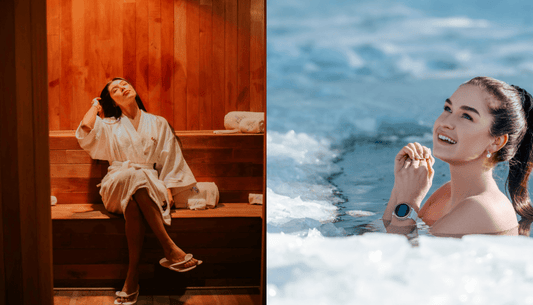
- Combine: contrast therapy (sauna blanket first, then ice bath) is the golden formula for many people – deep relaxation followed by sharp focus.
Frequently asked questions about ice baths
A typical ice bath is between 3 and 15°C. Beginners usually start at 10–15°C, the "optimal zone" for most benefits is around 8–12°C, and advanced users sometimes go down to 3–8°C. Colder than 3°C is not recommended - more risk without extra benefits.
Beginners: 30–60 seconds. Intermediate: 1–2 minutes. Advanced: a maximum of 2–3 minutes. Longer than 3 minutes in water below 8°C carries a risk of hypothermia, even for experienced users. Longer is not better – regularity matters more than duration.
For healthy adults who build up their experience: not significantly more dangerous than many sports, provided you build up sensibly. Risks: cardiovascular problems, hypothermia if you stay in too long, accidents when bathing alone in extreme cold. With cardiovascular disease, high blood pressure or pregnancy, consult a doctor first.
Main disadvantages: the cold shock response in the first 30 sec, risk of hypothermia if too long or too cold, inhibited muscle growth straight after strength training, possible arrhythmias with cardiovascular problems, and raised blood pressure shortly after the bath. With sensible use, these are manageable points.
The seven main benefits: faster muscle recovery after exercise, reduced inflammation, dopamine and mood boost (250% increase, 1–2 hours), increased focus and alertness, better circulation over time, stress resilience, a stronger immune system and cold tolerance. The effects are scientifically backed.
Yes, for recovery after endurance training, intensive cardio, team sports or during peak weeks. Reduces muscle soreness by 20–40% in the hours that follow. Not straight after pure strength training aimed at muscle growth - wait at least 4–6 hours. Or take ice baths on rest days.
For most people, 3–4x a week is optimal. Less often (1–2x) gives less cumulative effect. Daily is fine, but adds little extra value - and can inhibit training adaptations in people who train intensively.
Yes, in several ways: DIY with a large container and ice (cheap but impractical), budget ice baths without a chiller (seasonal), or an ice bath with an integrated chiller for year-round use. For regular use, a chiller system such as the Flamengo PolarPure is the most practical solution.
Conclusion
An ice bath offers seven scientifically backed benefits: muscle recovery, reduced inflammation, dopamine and mood boost, focus, better circulation, stress resilience and immune system modulation. The benefits do not come from extreme cold or long duration – 2–3 minutes at 8–12°C, 3–4x a week, delivers the most. Build up slowly (30–60 sec for beginners) and respect the safety limits – longer than 3 minutes in water below 8°C is a risk without extra gain. If you want to enjoy the benefits regularly, a good home set-up is crucial. A Flamengo PolarPure with an integrated chiller makes the difference between trying it occasionally and a lasting routine – no hauling ice, no waiting, usable year-round. Especially in combination with heat therapy (contrast therapy: sauna blanket first, then ice bath), you get the maximum effect: deep relaxation followed by sharp alertness. With cardiovascular disease or pregnancy, always consult your doctor first.
Make cold therapy a lasting routine – no hauling ice, year-round at your own temperature.
View the PolarPure ice bath →This article is for information only and does not replace medical advice. With cardiovascular disease, high blood pressure, pregnancy or other health complaints, always contact your doctor first. Flamengo supplies wellness products for self-management – not medical devices.